
.
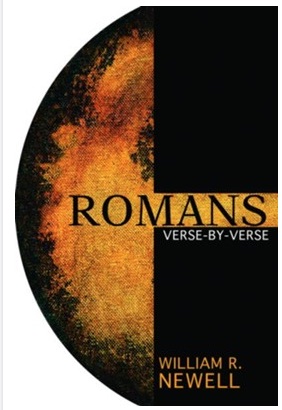
William R. Newell is an example of a well-respected Bible expositor who believed in man as spirit, soul, and body. Emmalon Davis comments that “Newell’s [Romans] Verse-by-Verse is a perfect combination of analytic exegesis and devotional interpretation … Because of Newell’s deep understanding of both Greek and English biblical translations, he is able to point out subtle yet essential features of the text that often go unnoticed by many readers. Throughout his commentary, Newell consistently defines difficult terminology and provides many additional footnotes for further technical clarification.” ccel.org/ccel/newell/romans/
Here are excerpts that show Newell’s discernment about the nature of man (emphasis added).
On Romans 1:9
The expression, “Whom I serve in my spirit in the gospel of His Son,” is striking and significant. Those who would make man to consist of but two parts, soul and body, cannot properly explain “spirit and soul and body” (I Thess. 5:23); much less “the dividing asunder of soul and spirit” (Heb. 4:12). The constant witness of Scripture is that man exists as a spirit living in a body, possessed of a soul. Paul’s service to God was in his spirit, and therefore in the Holy Spirit, and never “soulical” (not psychikos, but pneumatikos— I Cor. 2:14; Jude 19, Jas. 3:15). Paul did not depend on music, or architecture, or oratory, or rhetoric. He did not hold “inspirational” meetings to arouse the emotions to mystic resolves. He served God directly, in his spirit. It was the truth in the Holy Ghost he ministered, and the results were “that which is of the Spirit.” The spirits of his hearers were born again; and the Spirit witnessed to their spirits that they were born-ones of God.
On Romans 8:12 [concerning creation, the fall, and regeneration]
God formed man’s body, first, calling: him man (Gen. 2:7). Then he breathed into his nostrils the breath (literally, spirit) of life; and man became a living soul. His bodily functions we all know. His soul-life put him in touch with the world into which by Divine creation he had now been introduced, but man was essentially a spirit, living in a body, possessing a soul. It was with his spirit that God communed and in which alone man was God-conscious.
Now when man sinned, all was overthrown! The body, that was to be the tabernacle of this Divinely inbreathed or created spirit, took immediate lordship. The life of God was withdrawn from man’s spirit. He had died to God! The spirit became the slave of the body; and the propensities of the latter, normal and controlled before, became the whole urge or driving force of man’s existence! His soul, also, which included his five “senses,”—which perceived and enjoyed the external universe; with his reason and imagination, became controlled by what God called “the flesh.” “The thoughts of man’s heart,” became “only evil and that continually [Gen. 6:5].”
Now in the new birth the dead spirit (dead to God) is by Divine creation made alive, or enlifed with Christ; and the Holy Spirit becomes the sphere of man’s newly created spirit; for whatever the believer’s progress may be, he is no longer in flesh but in Spirit! The body’s demands are the same as ever, because the body is not yet redeemed; and to live after the desires of the body—“according to flesh”
StudyLight.org provides Newell’s commentaries on Romans, Hebrews and Revelation and notes that “William Reed Newell (1868-1956) was a distinguished American theologian, pastor, and teacher known for his profound influence on evangelical Christianity in the early 20th century. Born in Savannah, Ohio, Newell exhibited a keen interest in the scriptures from a young age, a passion that would guide the course of his life and ministry … His most enduring legacy stems from his tenure at the Moody Bible Institute in Chicago, where he served as a teacher and later as the assistant superintendent. It was here that Newell’s impact on Christian education and evangelism was most felt, as he mentored countless students who would go on to become influential leaders in Christian ministry.”
JBW
 Biblical Psychology