
In his book, Uncommon Thoughts About Commonly Held Beliefs, Glenn Murray covers helpful grace-oriented discipleship insights in 31 chapters.[1] His subtitle for this book is Insights from my half-century journey with Jesus. In addition to the endorsement by Os Guinness on the cover, there are ten additional written commendations of the author and this volume. John Park, Ph.D. (professor of Theology and Ethics at Azusa Pacific University) affirmed, “This book has a profound balance in Christian orthodoxy and orthopraxis. An indispensable book that all people should read!”
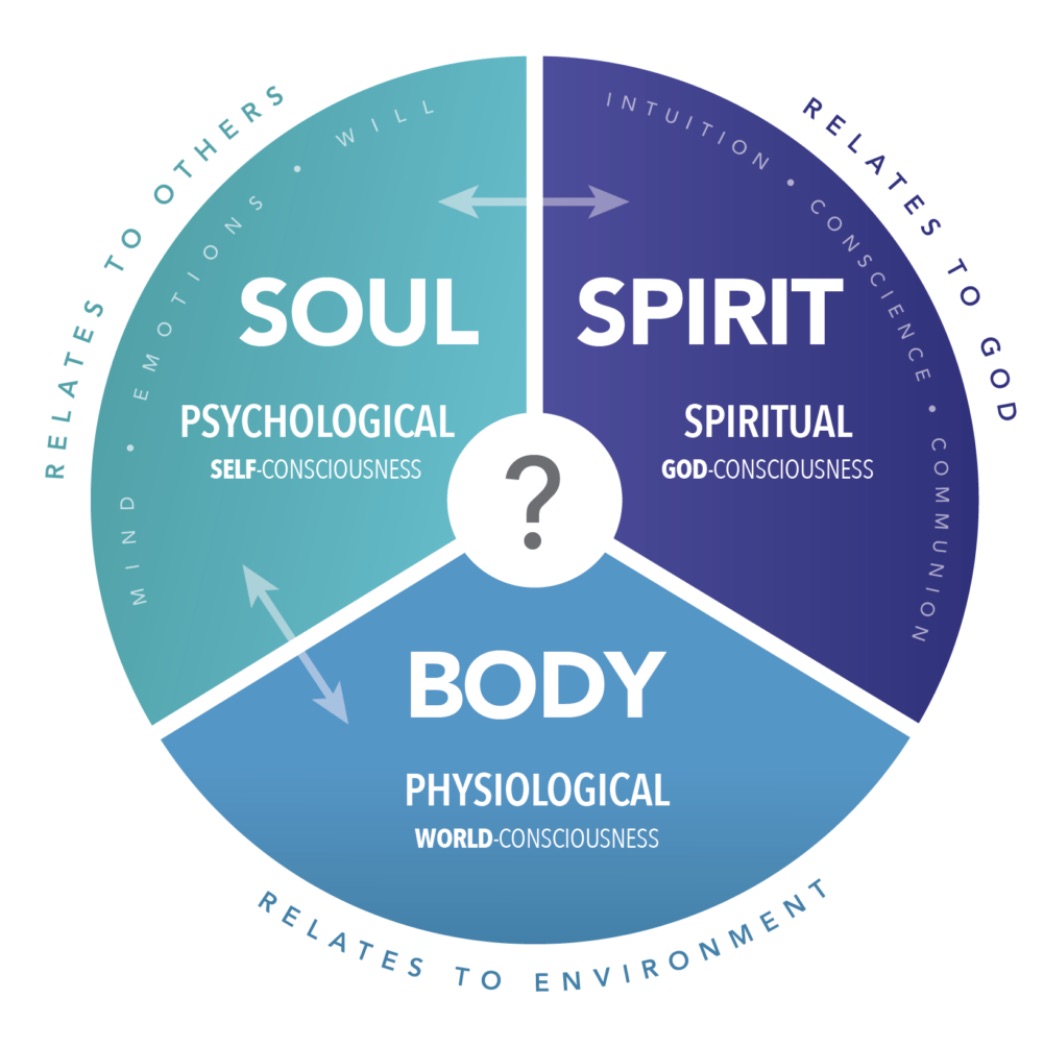
Chapter 7 is devoted to considering 2 Corinthians 5:17: Therefore, if anyone is in Christ, he is a new creation; old things have passed away; behold, all things have become new” (NKJV). Murray has found the model of man as spirit, soul, and body to be an important perspective in accurately interpreting this profound verse. However, he acknowledges that trichotomy is not always accepted:
“Before I go on, let me acknowledge that some good theologians believe that the soul and spirit are the same thing. I respectfully disagree with their conclusion and will explain why I don’t hold that view. In the late 1960s, prayer, the study of the Scriptures, and what the early Church fathers taught, formed my view of this subject. Additionally, Ray Stedman, a Bible teacher that I trusted, confirmed my conclusions. As mentioned earlier, the soul and spirit are closely related, but the Bible makes an explicit distinction between them. In 1 Thess. 5: 23, it’s very specific. “May your whole spirit and soul and body be kept blameless until our Lord Jesus Christ comes again.” (NLT) I acknowledge that at times, it’s difficult to discern the difference between the soul and spirit. However, Scripture does identify each and says that the Word of God will help us differentiate between them. “For the word of God is living and effective and sharper than any double-edged sword, penetrating as far as the separation of soul and spirit. (Heb. 4: 12 HCB)”
Murray then proceeds to logically evaluate what aspects of man have became radically new in Christ: body, mind, emotions, will…? Then he concludes,
“I now confidently believe that my spirit, which is the center of my being, is a new creation. As I remain soft and pliable, God will make my soul increasing more congruent with my spirit. By faith, I believe this, but too often I subconsciously revert to thinking that the real me is my soul and body, which has not yet been renewed. My tendency is to let my mind and emotions tell me that since my soul still has wrong motives, thoughts, and actions, I am not a new creation. The solution for this is to trust my unredeemed mind and emotions less and to believe by faith what God says about me. Therefore, it’s completely a faith issue. And that’s a good thing because the Bible tells us, “Without faith it’s impossible to please God” (Heb. 11: 6) Over time I have come to strongly believe that in my spirit I’m a new creation while my body and soul retain the human frailties that resulted from the disobedience of my “grandparents” Adam and Eve. (Eph. 1: 13-14)”
In this chapter the author accurately defines the threefold nature of man, noting how this sheds light on creation, the fall, redemption and sanctification.
__________
[1] Glenn Murray, UNCOMMON THOUGHTS ABOUT COMMONLY HELD BELIEFS: Insights from my half-century journey with Jesus (2019). Available in paperback and Kindle ebook
 Biblical Psychology