
Unknown's avatar

About jbwoodward

John serves as Director of Counseling and Training for Grace Fellowship International. His main article archive is GraceNotebook.com

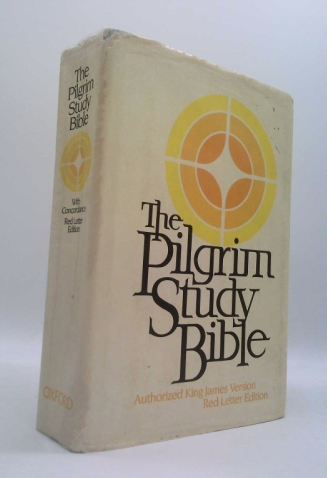
The Pilgrim Bible Notes

The Pilgrim Bible, first published in 1948 by Oxford University Press, was designed to help young people learn about their faith. However, it soon became apparent that this book was an invaluable resource for new Christians regardless of their age, and the Pilgrim ably served thousands of readers for some forty years.[1]

On Genesis 1:26: “Of all the creation, only man was created like God, a Trinity. Plants have only a body. Animals have a body and a soul. Man is a trinity who has a body, a soul, and a spirit. Someone has likened the body to sense-consciousness, the soul to self-consciousness, and the spirit to God-consciousness … Man has all these characteristics: body, soul, and spirit. We must remember, however, that God is a Spirit (John 4:24). It is in His spiritual image that Adam was created, and not in His physical image. God has infinite intellect, sensibilities, and volition, and these attributes will bestowed upon Adam in creation, but in a lesser degree.”[2]


[1] Publisher’s note

[2] E Schuyler English, editor, The Holy Bible: Pilgrim Edition. New York Oxford University Press, 1952.

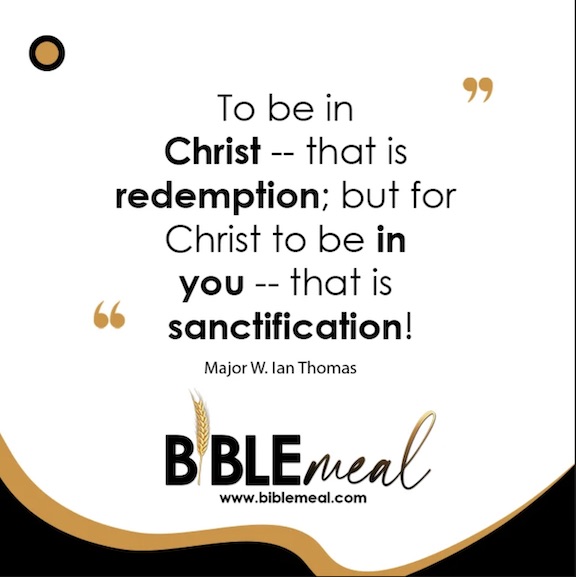
Major Ian Thomas: An Influential Legacy

Major W. Ian Thomas (1914 – 2007) was an evangelist, author, theological teacher and founder of the Torchbearers Bible schools. Many have been helped in their journey of Christian discipleship through his sermons and books. These include:

  • The Saving Life of Christ, (Zondervan 1961).
  • The Mystery of Godliness, (Zondervan, 1964).
  • If I Perish, I Perish: the Christian Life as seen in Esther, (Zondervan, 1968).
  • The Indwelling Life of Christ: All of Him in All of Me, (Multnomah, 2006).

Ian Thomas’ deeper life testimony is very significant, being recounted, for example, in They Found the Secret, by V. Raymond Edman (Zondervan) and briefly at https://deeperchristian.com/major-ian-thomas/

It is significant that Thomas’ biblical anthropology was clearly trichotomist. An earlier edition of The Mystery of Godliness featured a diagram illustrating man as body, soul (as mind, will and emotions) and spirit.

Here is an excerpt of his writing, “At His Disposal”:

“The moment you are redeemed through the atoning death of Christ upon the cross, you receive the Holy Spirit within your human spirit. You have “passed from death to life” – raised from the dead – and the Life which has been imparted to you by the Holy Spirit is the very Life of Christ Himself; ” He made us alive together in fellowship and in union with Christ. He gave us the very life of Christ Himself, the same new life with which He quickened Him” (Ephesians 2:5, Amplified New Testament).

“The life that the Lord Jesus Christ lived for you nineteen hundred years ago ­ condemns you; but the life that He now lives in you ­saves you! The Christian life is the Life which He lived then, lived now, by Him in you. As He behaved in the sinless Humanity which the Father had prepared for Him then, so He wants to behave in your humanity presented to Him now.

“[The soul is now addressed as mind, emotion and will] Your mind placed at His disposal through the indwelling Holy Spirit; your emotions, your will, all that you are and have, made available to the Lord Jesus Christ as a living member of His new corporate body on earth, which is called the church.

This is the new law in action, the law of the Spirit of Life in Christ Jesus… Your ‘behavior mechanism’ once more wholly ‘Deo-centric’ instead of ‘Ego-centric’ ‘so that the commandment of the law may find fulfillment’ in you, whose conduct, no longer under the control of your lower nature, ‘is directed by the Spirit’ [Rom. 8:4]. A radical change of government!” [1]

His book, If I Perish, I Perish, makes much of distinguishing aspects of the believer’s makeup (body, soul, and spirit) with additional contrasts of the flesh and the Holy Spirit.

Ian Thomas’ emphasis and legacy continue through Torchbearers International (also known as Capernwray), an interdenominational Christian ministry operating centers in 20 countries that offer short-term Bible school programs, conferences, camps and retreats.[2]

JBW
___________

[1] The Mystery of Godliness, emphasis and bracketed content added

[2] https://torchbearers.org/

Apostolos Makrakis: The Trichotomy of Man in Greek Orthodoxy

About the man

“Dr. Apostolos Makrakis (1831-1905) was a charismatic and controversial Greek Orthodox lay theologian, preacher, ethicist and philosopher who was a leader of the “awakening movement” in post-revolutionary Greece, and arguably one of the most important religious personalities of the 19th century. He was an extremely prolific writer whose works were translated widely outside of Greece, however his vigorous religious movement eventually turned the Holy Synod against him, resulting in his being condemned and jailed several times.

“…Apostolos Makrakis made ten Gospel tours across the country in total during his lifetime, becoming the most influential figure on the development of the Greek Church in the 19th and early 20th centuries.

“As a preacher, he was a new phenomenon in newly reborn Greece. Preaching during that period mostly was an activity of the marginal competitors of the Church, so that preaching, especially outside the temples by non-authorized figures, was violently repressed.

“…Apostolos Makrakis, the inspired theologian and powerful preacher of blessed memory…was gifted with a great mind, a deeply cultivated Christian heart, and an enthusiastic soul devoted exclusively to the Savior Jesus Christ.”[1]

Makrakis belief about man as spirit, soul, and body:

“Heaven-roving and God-taught St. Paul shows man to be composed of three essences when in writing to the Thessalonians he says: ‘And the very God of peace render you entirely complete; and may your whole spirit and soul and body be preserved blameless in the presence of our Lord Jesus Christ’ (Thess. 5: 23). Further the same Apostle in writing to the Hebrews says: “‘the Logos of God is so perspicuous that it separates the soul from the spirit.” So here you have three proved elements in man verified by reason and by experience and by the Holy Bible itself, namely, a spirit, a soul, and a body.”[2]

The doctrinal opposition to Makrakis

A biographer commented on the hostile motive of the bishop who rallied the synod to condemn Makrakis:

“…so long as Makrakis combated only Freemasonry and neither said nor wrote anything against the high priests, he was recommended by the latter as the Saviour of Orthodoxy, but when he proved certain high priests to be guilty of the crime of Simony [the act of selling church offices and roles or sacred things] and demanded their dismissal in accordance with the sacred regulations of the Church, war began to be waged upon him as a heretic teaching that man consists of body, soul, and spirit. Makarios, Bishop of Karystia, published excommunications and anathemas in opposition to this belief.”[3]

Affirmations from a defender of Makrakis

[Here is a reference to his teaching about the nature of man, beginning with the creation of Adam in Genesis 2:7. “And the Lord God formed man of the dust of the ground, and breathed into his nostrils the breath of life; and man became a living being.” NKJV]

“That the soul and the spirit of man are two different constituents of man can be proved by the Holy Bible itself and by the Fathers of the Church, as Apostolos Makrakis has shown. For every soul has received a body analogous to its nature and destiny, as is attested by the Bible, which says: ‘“‘Let the earth bring forth a living soul after its kind, quadrupeds and reptiles and wild beasts of the earth after their kind: and it was so. And God made the wild beasts of the earth after their kind, and the cattle after their kind, and all the reptiles of the earth after their kind: and God saw that they were good” (Gen. 1: 24-25). According to this passage God took the soul of every animal out of the earth, whether it were a wild beast, or one of the cattle, or a reptile, and invested it with a body analogous to its nature and destiny; accordingly, every animal was formed as a composite of soul and body. Similarly He took the soul of man out of the earth and moulded a body for it analogous to its nature and destiny. And for this reason the Bible says: “‘And God formed man out of the dust of the ground,” meaning, the soul together with the body, and not a body without a soul, as the irrational and arbitrary interpretation offered by modernistic theologians would have it by distorting the sense of the words of the Bible, which goes on to say: “‘and (God) breathed into his person a breath (or spirit) of life; and the man became a living soul’ (Gen. 2: 7), vivified by the Spirit of God, who had already made the soul… The word man as signifying a human being, of either sex and of any age, denotes the two constituents of a human being, namely, the soul and the body, both of which, according to the Bible, were taken out of the earth; thereupon there was added the spirit breathed in, by virtue of which the soul received the additional attribute of life, and man thus became a tricomposite creature consisting of three distinct essences, namely, body, soul, and spirit, and not bicomposite.”

[Concerning I Thessalonians 5: 23] “These positions concerning the soul and concerning the tricomposite constitution of man were shown by the teacher Makrakis directly from the beginning to be true by means of countless testimonies of Scripture and by means of logical proofs, which the enemies of the truth were unable to traverse, except by the offer of unwitnessed and unproved calumnies and slanders. Thus, in the first place they garbled the positions of the teacher by omitting the words immaterial, immortal, and substituting therefor the contrary words material, mortal, and afterwards traducing and slandering him…”[4]

Other testimonies of trichotomy in Greek Orthodoxy of the day.

“GREGORY PARAMICHAEL, [was] a contemporary of A. Makrakis and a professor of theology in the National University of Athens, Greece. He wrote the Preface to the Practical Sunday Sermons on the Gospels, by Constantine Callinicos, former parson of the Greek Orthodox Community of Manchester, England. Among other things in the Preface he writes the following: ‘According to the three components of man, namely, the body, the soul, and the spirit,’ etc. (Edition of Alexandria, 1916, page xii). Here is clear and unmistakable evidence concerning the tricompositeness of man and taught by a professor of theology, and one belonging officially to the clergy of the Church of Greece.”[5]

Conclusion

Note that this influential, scholarly, Greek Orthodox preacher taught man as trichotomous with strong arguments from the Bible, and Church history, and contemporary Orthodox teachers. The debate about dichotomy versus trichotomy continues in the Protestant church also.

JBW


[1] Quotes from https://orthodoxwiki.org/Apostolos_Makrakis

[2] The Paramount Doctrines of Orthodoxy by Apostolos Makrakis Translated by D. Cummings. Chicago: The Orthodox Christian Education Society, 1954
( Referenced at www.Archive.org )

[3] https://orthodoxwiki.org/Apostolos_Makrakis

[4] The Paramount Doctrines of Orthodoxy

[5] The Paramount Doctrines of Orthodoxy

An Expositor’s Clarity

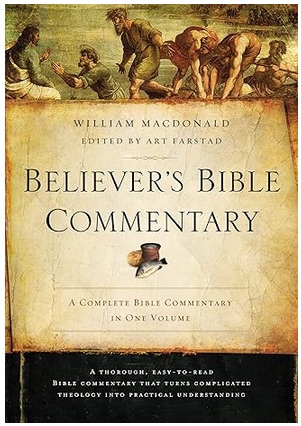
William-MacDonald (1917-2007) was a Plymouth Brethren theologian and author of 84 published books. He served as President of Emmaus Bible College for 6 years, followed by international Bible teaching for over 40 years. [1]

This is his commentary on a key passage about biblical psychology— 1 Thessalonians 5:23:

“The apostle also prays for the preservation of the Thessalonians. This preservation should include the complete person—spirit, soul, and body. Notice the order. Man always says body, soul, and spirit. God always says spirit, soul, and body. In the original creation, the spirit was of first importance, the body last. Sin reversed the order; man lives for the body and neglects the spirit. When we pray for one another, we should follow the biblical order, putting spiritual welfare before physical needs.

“From this verse and others, it is clear that we are tripartite beings. Our spirit is that part which enables us to have communion with God. Our soul has to do with our emotions, desires, affections, and propensities (John 12:27). Our body is the house in which our person dwells (2 Cor. 5:1).

“All of our parts need to be preserved entire, that is, complete and sound. One commentator has suggested the needs for preservation as follows:

“The spirit from (a) everything that would defile it (2 Cor. 7:1); (b) everything that would hinder the testimony of the Holy Spirit to the saints’ relationship with God (Rom. 8:16); or (c) everything that would prevent the worship which He seeks (John 4:23; Phil 3:3).
The soul from (a) evil thoughts (Matt. 15:18, 19; Eph. 2:3); (b) fleshly appetites that war against it (1 Pet. 2:11); and (c) contention and strife (Heb. 12:15). The body from (a) defilement (1 Thess. 4:3–8); and (b) evil uses (Rom. 6:19).

“Some deny that the unsaved have a spirit. Perhaps they base this on the fact that they are spiritually dead (Eph. 2:1). However, the fact that the unsaved are spiritually dead does not mean that they have no spirit. It means that they are dead as far as fellowship with God is concerned. Their spirits may be very much alive, for example, as far as contact with the world of the occult is concerned, but they are dead Godward.” [2]

MacDonald was another respected Bible teacher who affirmed man as spirit, soul, and body.


[1] Wikipedia and William-Macdonald.org

[2] Believer’s Bible Commentary: Second Edition, by William MacDonald, Arthur L. Farstad (Thomas Nelson, 2016). See the post from this commentary about Hebrews 4:12

Nancy Missler: The Temple Symbolism

Author and conference speaker, Nancy Missler, did extensive Bible study on Biblical psychology and used the symbolism of Solomon’s Temple to illustrate the important distinctions of man’s spirit, soul, and body. Here are sample quotes from her:

In 1 Corinthians 3:16 Paul says, “Know ye not that ye are the Temple of God, and that the Spirit of God dwelleth in you?” What is Paul really saying here?

… I would like to investigate further the spiritual significance of Solomon’s Temple, because I believe it’s a perfect model or blueprint of a New Testament believer indwelt by the Holy Spirit. Truly, as Paul says, we are the Temple of God and the Spirit of God does dwell in us.

…The Holy of Holies in Solomon’s Temple, I believe, is analogous to a believer’s new spirit (pneuma) … and the Outer Court represents a believer’s body (soma),which is the vehicle by which we express our life (soul). Together, our soul and body are known as the “flesh.”

As a born again believer (one who has asked Jesus to come into his heart), the Spirit that now dwells at the core of our being is not our “old” human spirit anymore [Rom. 6:6], but a totally new spirit [Eph. 4:24]. It’s now God Himself (the Father, Son and Holy Spirit) dwelling in us. This is exactly what being “born again” means.

It means receiving a totally new power source or life source. God has united our spirit with His and we have become one spirit with Him. 1 Corinthians 6:17 validates this, “…he that is joined unto the Lord is [now] one spirit [with Him].” So, our spirit is now the new energy source that will create God’s Life within us.[1]

In an unbeliever, that power source is going to be the human spirit (Job 32:8), whereas in a born again believer his “spirit” will be united with God’s Spirit (1 Corinthians 6:17). This is exactly what it means to be born again. It means our human spirit has been united with God’s Spirit, so we now have a new power source or life source.[2]

[The Christian] recog­nizes that the soul of man grows out of the interaction between the body and spirit and is the means by which man communicates to the outside world. Through faith in Jesus Christ, the believer possesses the indwelling source of God’s life from whom he is possessed with joy, fulfillment, and victory.

The field of psychology is ultimately doomed to frustration since it cannot penetrate beyond the psyche (soul). It is impossible to infer the inner structure of man from only observing his external behavior. This is just as futile as attempt­ing to ascertain, from its external behavior, the internal architecture of software running on a computer since it is also a self-modifying entity operating inside an infinite state machine.[3]


Nancy went beyond the writers who focus on the simpler model of the Mosaic Tabernacle— She compared the Holy Place with the believer’s new heart, the soul with the inner court and the body with the outer court. She also addressed the need for deeper renewal of the subconscious through the analogy of the Temple’s storage chambers. For more detail, see her book, Be Ye Transformed.

Nancy went to be with the Lord in 2015 at age 77. She and her husband, Chuck, were married for 58 years. Nancy published 13 books including: The Way of Agape, Be Ye Transformed, and Faith in the Night Seasons. Her materials have transformed lives and marriages around the world.

Nancy is the founder of The King’s High Way Ministries; an international ministry dedicated to encouraging and teaching Christians how to “walk out” their faith in God’s Love. She always focused on the practical application of Biblical principles.
(Bio adapted from http://kingshighway.org/nancy-missler/)

J.B.W.

  1. http://kingshighway.org/inspiration/articles/your_temple/spiritual/
  2. http://kingshighway.org/inspiration/articles/your_temple/ourmind/
  3. http://kingshighway.org/inspiration/articles/your_temple/sub/

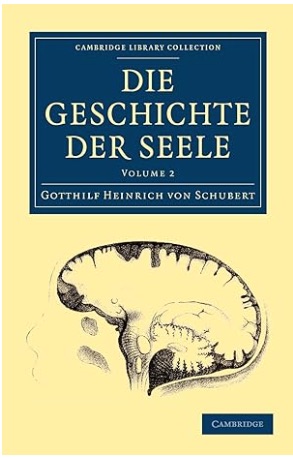
The History of the Soul – von Schubert

Amazon’s store gives this description of an influential book by German philosopher/theologian/psychologist, von Schubert:

Die Geschichte der Seele (Cambridge Library Collection), German Edition
“This is the fourth, revised and expanded 1850 edition of an influential two-volume work originally published in 1830 by the German scientist and philosopher Gotthilf Heinrich von Schubert (1780–1860). Schubert studied theology and medicine, and taught natural history at Erlangen and Munich, specialising in botany, forestry and mineralogy. He also lectured on topics including animal magnetism, clairvoyance and dreams, and attempted to reconcile Enlightenment philosophy with Christian faith. This book sets out Schubert’s views on human nature as body, soul and spirit, and on humankind’s place in the natural order. Volume 2 focuses mainly on the ‘soul’, which Schubert differentiates from the ‘spirit’ that clothes and feeds it… Schubert refers frequently to Classical and early Christian philosophers as he probes phenomena now assigned to psychology, including cognition and discernment.”

Wikipedia notes,

“Schubert aimed to create a religiously-grounded interpretation of the cosmos .… Schubert advocated an ecumenical “awakened Christianity” which found evidence for God both in Nature and in the human soul. Synthesising the Bible with the philosophy of Schelling, he was a major figure in the “later Enlightenment”. In his History of the Soul (1830), Schubert again attempted to fuse the philosophy of Herder and Schelling with the Christian tradition.”

The significance of von Schubert’s writings in this blog is to observe how trichotomy was a significant model of anthropology in the 1800’s.

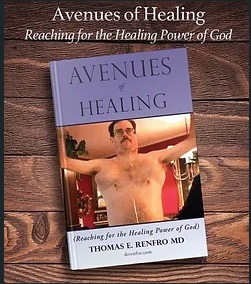
Avenues of Healing

Thomas Ronfro M.D. is an advocate for holistic health. In 1996 he was diagnosed with stage 4 mantle cell lymphoma, an aggressive, cancerous malignancy. In addition to medical treatment, Renfro was the recipient of much prayer and biblical counseling. He made a miraculous recovery and has written this testimonial, informative book.

Dr. Renfro sees the importance of man as spirit, soul and body. Chapter 13 is titled We are a Three-Part Person. Here is an excerpt:

“3 John 2 ‘Beloved, I wish above all things that
thou mayest prosper and be in health, even as thy soul prospereth.’

“God created man as a three-part person. Genesis 2:7 ‘And the Lord God formed man of the dust of the ground, and breathed into his nostrils the breath of life; and man became a living soul.’ The combination of dust, (body) with the breath of God, (spirit) makes us a living soul. God is represented as a trinity, God the Father, God the Son, and God the Holy Ghost. We, being created in the image and likeness of God, we are also a trinity, the body, soul, and spirit.”

“We are a three-part person woven together into one, overlapping… We all have a physical body that interacts with our environment though the five senses. We all have a spirit that is reaching toward God to learn of him, developing our morality and to follow his ways. Between our physical body and spiritual aspect is our soul, which consists of our mind, will, and emotions. All parts directly interact and influence the other parts of our being. Our reactions to any situation depend on which aspect of our being is exerting the most influence… “(p. 85)

Dr Renfro’s trichotomy is holistic. He goes on to explain,

“Our overall health depends upon the health of all three aspects of our being. When the body is compromised, sick, or injured, this can adversely affect the other parts of our being. Sickness in the body affects us mentally, making it harder to think, to concentrate, and even clouds our judgment. Sickness with its misery impacts our emotional state, giving place to more worry, anxiety, and frustration leading to depression. Emotional stress is manifested physically
through our ‘body language’ of joy or sadness, calm or panic, worry or assurance. Physical illness even compromises our spirit, weakening our faith in God and his word, leading to despair and hopelessness.

“This seems to be the natural progression when the physical body is injured, fighting cancer or chronically ill. The physical illness and misery of the body tends to pull down the rest of our being.

“But why do we have to allow the physical problems so much influence over our soul (mind, emotions and will) and spirit? Is there a way to rally the forces of our soul and spirit to help this body in its battle with sickness and disease, injury, or disability?” (p.86).

This is the primary purpose of his book, giving inspiration and counsel about three dimensional health. His healing testimony was included in a TV program; the video is on his web site: DrRenfro.com

JBW


Thomas E Renfro, Avenues of Healing: Reaching for the Healing Power of God (Xulon, 2020)

The Doctrine of Man – Dr. R. Weidner

Revere Franklin Weidner, D.D., LL.D. served as Professor of Theology in the Chicago Lutheran Theological Seminary. His book, The Doctrine of Man, drew from 30 years of teaching and classroom discussion. In addition to biblical research, his primary sources authors were described “those who believe in God’s inspired Word, and especially as confessed by that large and rapidly increasing Church, known as the first Protestants in history” (p. vii). He listed them:

  • Luthardt’s Kompendium der Dogmatik,
  • Krauth’s Conservative Reformation,
  • Delitzsch, System of Biblical Psychology
  • Julius Mueller, The Christian Doctrine of Sin
  • Harless, System of Christian Ethics 

The Lutheran theologians are more likely to teach the trichotomy of man, as Luther did, wheres theologians in the Calvinistic tradition are usually dichotomist. His teaching is consistent with holistic trichotomy: man is one in personhood, with two separable elements, but three distinguishable parts. Here is an excerpt of Dr. Weidner’s content in the chapter on “The Constituent Elements in Man” (pp. 15,16):

The spirit and soul of man are to be distinguished as primary and secondary, but not with the view that the spirit and soul are substantially one and the same. Two passages, in this connection, claim special consideration, 1 Thess. 5:23 and Heb. 4:12.

1) In 1 Thess. 5:23 the apostle stringently analyzes the human constitution into spirit, soul, and body. But these three elements, to every one of which the work of sanctifying grace extends, are in nowise three essentially distinct elements.

2) So likewise in Heb. 4:12, there are two elements in the psychical life of man; how else could a dividing asunder of soul and spirit, which God’s word effects in us, be spoken of?

The apostle’s view, in the final result, is certainly dichotomic, body on the one hand, and soul and spirit, inseparably joined together, on the other.

  1. But spirit and soul are of a similar nature.

Spirit and soul are not two distinct natures, but two distinct elements in the psychical life of man. The body and the spirit of man are of distinct nature, but the soul belongs to the side of spirit.

Man has received his life-principle immediately from God. From this one principle are derived both his bodily his spiritual life. The body without the spirit is dead (James 2:26). There is no natural soul between spirit and body, but only a life of the soul that proceeds from the spirit itself. The spiritual or understanding soul and the bodily soul are in their essence and nature one. The one thing on which we must lay stress is that the soul is of one nature with the spirit.

  1. The soul proceeds from the spirit.

If, according to Scripture, the soul does not belong to the side of man’s bodily nature, but to the side of his spirit, it is either one and the same with his spirit, or else the soul proceeds from his spirit. The true view is that the soul, whether it be called substance or potentiality, is not the spirit itself, but another nature conditioned by the spirit, although standing incomparably nearer to it than to the body. Possibly it is best to say, the spirit and soul are of one nature, but of distinct substances.

  1. Delitzsch and Zezschwitz agree in the definition of the spirit of man.

The pneuma or spirit, is with perfect justice defined by Von Zezschwitz as the highest spiritual power, comprehending, ruling, penetrating all the powers of the soul and the body in the power of its own connection with God.

  1. The main proof is the important passage, Gen. 2:7, “Jehovah God . . . breathed into his nostrils the breath of life, and man became a living soul.”

The spirit stands in immediate causal relation to God, and for this reason all the divine operations having redemption in view address themselves first of all to the pneuma or spirit, and only thence attain to the psuche or soul, and when God manifests Himself He appeals to the spirit of man, and first of all man’s spirit is renewed (Ps. 15:10, “renew a right spirit within me;” Tit. 3:5, “according to his mercy he saved us, through the washing of regeneration and renewing of the Holy Ghost”).

The soul is the mediating link of the spirit and the body, the peculiar form of the personality of man. The spirit is the inbreathing of the Godhead, and the soul is the outbreathing of the spirit. The spirit is the life-centre provided for the body, and the soul is the raying forth of this centre of life. The spirit is the inward being of the soul, and the soul is the external nature of the spirit.”

R. Weidner, The Doctrine of Man: Outline Notes Based on Luthardt. Chicago: Wartburg, 1912.

Dr. Weidner’s other published works:

Theological Encyclopedia: 
Vol. 1. Exegetical Theology
Vol. 2. Historical, Systematic, and Practical Theology

Biblical Theology of the Old Testament

Biblical Theology of the New Testament
Vol. 1. The Teaching of Jesus, and of Peter
Vol. 2. The Teaching of Paul, and of John

Studies in the Book. 5 vols

New Testament:

Vol. 1. Historical Books, General Epistles, and Revelation
Vol. 2. Early Epistles of Paul
Vol. 3. Later Epistles of Paul

OLD TESTAMENT:

Vol. 1. Genesis
Vol. 2. Exodus
Vol. 3. Historical Books
Vol. 4. Prophetical Books
Vol. 5. Wisdom Literature

COMMENTARIES:

Commentary on Mark
Commentary on Four Gospels

-JBW


Soul and Spirit in the Writings of Viktor Frankl

The legacy of Viktor Frankl’s books and psychological theory is an important testament to the value of discerning the nature of man as not only physical, and psychological, but also spiritual.

Wikipedia’s summary is that “Viktor Frankl (1905 – 1997) was an Austrian neurologist, psychologist, philosopher, and Holocaust survivor, who founded logotherapy, a school of psychotherapy that describes a search for a life’s meaning as the central human motivational force … Frankl published 39 books. The autobiographical Man’s Search for Meaning, a best-selling book, is based on his experiences in various Nazi concentration camps.”[1]

Man’s Search For Meaning is an important book, having sold over 16 million copies. The publisher gives this description: “Viktor Frankl’s riveting account of his time in the Nazi concentration camps, and his insightful exploration of the human will to find meaning in spite of the worst adversity, has offered solace and guidance to generations of readers since it was first published in 1946. At the heart of Frankl’s theory of logotherapy (from the Greek word for ‘meaning’) is a conviction that the primary human drive is not pleasure, as Freud maintained, but rather the discovery and pursuit of what the individual finds “meaningful.”[2]

Frankl’s observations, derived from his spiritual capacities, considers man as a three dimensional being, who searches for meaning, has a conscience, and is capable of self-transcendence. [Even if a person is not spiritually alive toward God, he can perceive basic spiritual realities.] As the apostle Paul declared about humanity, “because what may be known of God is manifest in them, for God has shown it to them. For since the creation of the world His invisible attributes are clearly seen, being understood by the things that are made, even His eternal power and Godhead…” (Rom. 1:19,20). Romans 2:15 adds that everyone has a conscience, which is a faculty of the spirit of man (Rom. 2:15).

Hendrika Vande Kemp made this observation about Frankl’s recognition of the psychological / spiritual distinction in man:

“…Many contemporary depth psychologists … are forced to confront the unconscious in all its complexity and, through their clinical experience, find that it manifests itself in two forms which are at times distinct, at other times indistinguishable: spirit and soul. Such a version of trichotomy may be found in Frankl, who divided individual functioning into three factors: physical, psychological, and spiritual (Tweedie, 1961). Here, we are spiritual beings who have a psyche. Consciousness grows out of unconscious spirituality, which also gives rise to love, conscience, and esthetic appreciation. The spirit may be masked by the psyche, in that neuroses and psychoses interfere with the free expression of spirituality.” [3]

We can conclude that it is the spiritual dimension of man that lifts one to be aware of these life principles, including the search for meaning. The basic principles that Frankl articulated can be deduced from general revelation—personal consciousness and life experience. These tenets helped him, and have helped others, navigate the sorrows of life in this fallen world.

________________

[1] https://en.wikipedia.org/wiki/Viktor_Frankl

[2] https://www.viktorfranklinstitute.org/about-logotherapy/

[3] Hendrika Vande Kemp, “The Tension Between Psychology and Theology: An Anthropological Solution.” Journal of Psychology and Theology, 1982, Vol. 10, No. 3, 208-09.

J.B.W.

An Expositor’s Example: William R. Newell

William R. Newell is an example of a well-respected Bible expositor who believed in man as spirit, soul, and body. Emmalon Davis comments that “Newell’s [Romans] Verse-by-Verse is a perfect combination of analytic exegesis and devotional interpretation … Because of Newell’s deep understanding of both Greek and English biblical translations, he is able to point out subtle yet essential features of the text that often go unnoticed by many readers. Throughout his commentary, Newell consistently defines difficult terminology and provides many additional footnotes for further technical clarification.” ccel.org/ccel/newell/romans/

Here are excerpts that show Newell’s discernment about the nature of man (emphasis added).

On Romans 1:9
The expression, “Whom I serve in my spirit in the gospel of His Son,” is striking and significant. Those who would make man to consist of but two parts, soul and body, cannot properly explain “spirit and soul and body” (I Thess. 5:23); much less “the dividing asunder of soul and spirit” (Heb. 4:12). The constant witness of Scripture is that man exists as a spirit living in a body, possessed of a soul. Paul’s service to God was in his spirit, and therefore in the Holy Spirit, and never “soulical” (not psychikos, but pneumatikos— I Cor. 2:14; Jude 19, Jas. 3:15). Paul did not depend on music, or architecture, or oratory, or rhetoric. He did not hold “inspirational” meetings to arouse the emotions to mystic resolves. He served God directly, in his spirit. It was the truth in the Holy Ghost he ministered, and the results were “that which is of the Spirit.” The spirits of his hearers were born again; and the Spirit witnessed to their spirits that they were born-ones of God.

On Romans 8:12 [concerning creation, the fall, and regeneration]
God formed man’s body, first, calling: him man (Gen. 2:7). Then he breathed into his nostrils the breath (literally, spirit) of life; and man became a living soul. His bodily functions we all know. His soul-life put him in touch with the world into which by Divine creation he had now been introduced, but man was essentially a spirit, living in a body, possessing a soul. It was with his spirit that God communed and in which alone man was God-conscious.

Now when man sinned, all was overthrown! The body, that was to be the tabernacle of this Divinely inbreathed or created spirit, took immediate lordship. The life of God was withdrawn from man’s spirit. He had died to God! The spirit became the slave of the body; and the propensities of the latter, normal and controlled before, became the whole urge or driving force of man’s existence! His soul, also, which included his five “senses,”—which perceived and enjoyed the external universe; with his reason and imagination, became controlled by what God called “the flesh.” “The thoughts of man’s heart,” became “only evil and that continually [Gen. 6:5].”

Now in the new birth the dead spirit (dead to God) is by Divine creation made alive, or enlifed with Christ; and the Holy Spirit becomes the sphere of man’s newly created spirit; for whatever the believer’s progress may be, he is no longer in flesh but in Spirit! The body’s demands are the same as ever, because the body is not yet redeemed; and to live after the desires of the body—“according to flesh”

StudyLight.org provides Newell’s commentaries on Romans, Hebrews and Revelation and notes that “William Reed Newell (1868-1956) was a distinguished American theologian, pastor, and teacher known for his profound influence on evangelical Christianity in the early 20th century. Born in Savannah, Ohio, Newell exhibited a keen interest in the scriptures from a young age, a passion that would guide the course of his life and ministry … His most enduring legacy stems from his tenure at the Moody Bible Institute in Chicago, where he served as a teacher and later as the assistant superintendent. It was here that Newell’s impact on Christian education and evangelism was most felt, as he mentored countless students who would go on to become influential leaders in Christian ministry.”

JBW