Unknown's avatar

About jbwoodward

John serves as Director of Counseling and Training for Grace Fellowship International. His main article archive is GraceNotebook.com

An Exposition of 1 Thess. 5:23-24

by Dr. Jay Jackson
GOD IS FAITHFUL TO EXECUTE HIS PURPOSES
1 THESSALONIANS 5:23-24
PART 2
We began last week considering the faithfulness of God in terms our callings. We continue this truth today.
I. HE IS FAITHFUL FOR THE CALL

A. The Call for Sanctification  “Now may the God of peace Himself sanctify you entirely…,” (cf. 4:7)

B. The Call for Preservation  “…may your spirit and soul and body be preserved complete without blame at the coming of our Lord Jesus Christ.”  Cf. Rom. 8:28-31  
The word “preserved” is a term which means “to guard, watch over, or protect.” Four times we find this same word in Christ’s High Priestly prayer from John 17. It was used of the disciples in verse 6 saying they had “kept” God’s word. Next, in verse 11 Jesus asks the Father to “keep” these men in His name. Jesus, in verse 12 declares He was “keeping” them in the Father’s name. Finally, in verse 15, Jesus does not ask the Father to take them out of the world, but to “keep” them from the evil one. We see two characteristics of this preservation.

1. The Completeness of This Protection   “…may your spirit and soul and body be preserved complete….”
The word “complete” speaks of the wholeness of this protection. This term is used in connection with three components of man. Some say we are only made up of two parts, material and immaterial. Some combine spirit and soul to come to this conclusion. However, a rule of hermeneutics tells us that “and” used with each word singles out each term and emphasizes the significance of each. The spirit is the part of man which separates him from the animal kingdom. Animals have a body and soul but are governed by instinct. Man is a spiritual being who can have a relationship with God. Animals do not have that capacity. Man, when spiritually dead, is void of the life of God in his spirit. Regeneration makes a dead man alive in his spirit. The soul is the mind, emotions and will or the personality. Finally, we all can agree we have a body which relates to the physical world by our five senses. Notice all are included in this protection. The plea is that God will protect the spirit, the soul and the body completely or entirely.
There is no way we can protect ourselves from spiritual evil. We cannot protect ourselves from the attacks in our mind, the negative emotions we have each day, or the attacks against our will. We need the Lord. This should be our prayer each day-“Lord keep me today in my spirit, my soul and my body.” Every area of our life is covered by these three aspects. God will keep each area completely.
2. The Blamelessness of This Protection  “…be preserved complete without blame….”
Jesus is coming back and the protection will insure our blamelessness before Him. How good is that?!  We cannot insure a blameless life apart from asking Him to protect us. Who is doing the protection and producing a blameless life? It is the Lord Himself.
II. HE IS FAITHFUL FOR THE CAPACITY   v. 24
“He will bring it to pass” captures the capacity of the Lord. All that we have considered falls upon the Lord. Since He calls us to sanctification, then He must bring it to pass. Since He calls us to freedom over sin, He must do it. Since He calls us to serve Him, He must do it. Since He calls us to love the unloving, He must do it. Since He calls us to forgive our offenders, He must do it. Every demand the Lord makes upon us, He undertakes to perform.
Has He called you to some severe circumstance? He will sustain, because He is faithful as our capacity. Has he called you into a relationship that is difficult? He will love and minister to that person through you, because He is faithful. He is faithful as our capacity!
III. HE IS FAITHFUL FOR THE COMPLETION
“He also will bring it to pass.”
The phrase “will bring it to pass” is one Greek word sometimes translated “do, perform, accomplish or to make happen.” So, if the Lord calls us to sanctification, He is responsible for handling the call and finishing the task.
We could illustrate this from Mark 4:35-41. Jesus called the disciples to go across the Sea of Galilee, “Let us go over to the other side” (v. 35). Jesus did the calling. Next, when the storm came up it appeared they would not make it. However, when the Lord awoke, He calmed the storm (v. 39). His capacity provided the way for them to make it to fulfill His calling. Finally, 5:1 states, “They came to the other side of the sea.” Jesus was faithful to insure completion of the calling. He is faithful for His callings. His capacity never fails, so we see He is faithful for the capacity of the calling. He is faithful for the completion. He will insure His desired result.
Oct. 20, 2017, Wales Goebel Ministry – Evangelism, Discipleship, Bible Study …
www.wgministry.org 

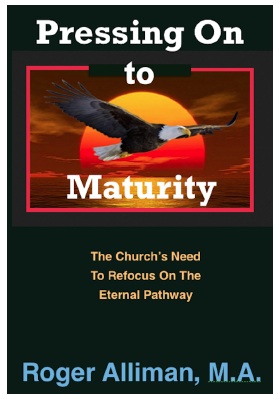
Pressing On to Maturity

Nearly all seminaries seem to avoid the basic distinction between spirit, soul, and body.
Distinctions that the Apostle Paul and the writer of Hebrews clearly pointed out as an
underlying force in the personal understanding of what God has done on our behalf, and
how he is always pressing us forward toward maturity on the path of righteousness. This is
not something that we must wait for in the age to come, but much of that completeness
is for God’s people right now, today, as we rest in his faithfulness and promises of the
wholeness that he has given his children for this life. We must learn to express our trust in
God by releasing ourselves to follow through with the actions that are necessary to validate and express our true identity to the world around us.

let us press on to maturity, not laying again a foundation of repentance from dead works and of faith toward God...(Hebrews 6:1).

This new book is available via Amazon.com here.

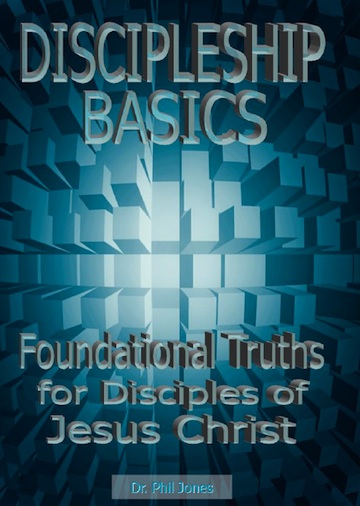
Discipleship Basics

discipleshipbasics_coverGrace discipleship is simply profound and profoundly simple. Here is a practical four lesson booklet, Discipleship Basics, by Dr. Phil Jones. These lessons are not intended to be comprehensive, but are foundational and user-friendly. Here is a free copy of the PDF notebook: Discipleship Basics – All Lessons Booket Format

Here is a four message downloadable audio series that corresponds with the lessons. They are at Grace Fellowship Internationals’ Sermon.net audio channel here.  These were produced and preached at First Baptist Church of Powell in Tennessee.

These lessons have added clarity through Dr. Jones teaching a spirit/soul/body model of man.

Loving God with All Your Heart

1john4_8

Pastor Jeff Barbieri of Mountainview Bible church preached a message that accurately parses the biblical psychology of Mark 12:28-34:

“One of the scribes came and heard them arguing, and recognizing that He had answered them well, asked Him, “What commandment is the foremost of all?” Jesus answered, “The foremost is, ‘HEAR, O ISRAEL! THE LORD OUR GOD IS ONE LORD; AND YOU SHALL LOVE THE LORD YOUR GOD WITH ALL YOUR HEART, AND WITH ALL YOUR SOUL, AND WITH ALL YOUR MIND, AND WITH ALL YOUR STRENGTH.’ “The second is this, ‘YOU SHALL LOVE YOUR NEIGHBOR AS YOURSELF.’ There is no other commandment greater than these.” The scribe said to Him, “Right, Teacher; You have truly stated that HE IS ONE, AND THERE IS NO ONE ELSE BESIDES HIM; AND TO LOVE HIM WITH ALL THE HEART AND WITH ALL THE UNDERSTANDING AND WITH ALL THE STRENGTH, AND TO LOVE ONE’S NEIGHBOR AS HIMSELF, is much more than all burnt offerings and sacrifices.” When Jesus saw that he had answered intelligently, He said to him, “You are not far from the kingdom of God.” After that, no one would venture to ask Him any more questions.” (NASB)

The (downloadable) audio message with notes is online here:
mountainviewbiblechurch.com/church-sermons

The True Nature of the Fall

This excerpt from Watchman nee’s devotional classic, The Normal Christian Life, includes the spirit/soul/body distinction:

[Let us] go back … to Genesis and consider what it was that God sought to have in man at the beginning and how His purpose was frustrated. In this way we shall be able to grasp the principles by which we can come again to live in line with that purpose.

If we have even a little revelation of the plan of God we shall always think much of the word ‘man’. We shall say with the Psalmist, “What is man, that thou art mindful of him?” The Bible makes it clear that what God desires above all things is a man—a man who will be after His own heart.

So God created a man. In Genesis 2:7 we learn that Adam was created a living soul, with a spirit inside to commune with God and with a body outside to have contact with the material world. (Such New Testament verses as 1 Thessalonians 5:23 and Hebrews 4:12 confirm this threefold character of man’s being.) With his spirit Adam was in touch with the spiritual world of God; with his body he was in touch with the physical world of material things. He gathered up these two sides of God’s creative act into himself to become a personality, an entity living in the world, moving by itself and having powers of free choice. Viewed thus as a whole, he was found to be a self-conscious and self-expressing being, “a living soul”.

We saw earlier that Adam was created perfect—by which we mean that he was without imperfections because created by God—but that he was not yet perfected. He needed a finishing touch somewhere. God had not yet done all that He intended to do in Adam. There was more in view, but it was as yet in abeyance. God was moving towards the fulfillment of His purpose in creating man, a purpose which went beyond man himself, for it had in view the securing to God of all His rights in the universe through man’s instrumentality. But how could man be instrumental in this? Only by a co-operation that sprang from living union with God. God was seeking to have not merely a race of men of one blood upon the earth, but a race which had, in addition, His life resident within its members. Such a race will eventually compass the downfall of Satan and bring to fulfillment all that God has set His heart upon. It is that that was in view with the creation of man.

Then again, we saw that Adam was created neutral. He had a spirit which enabled him to hold communion with God; but as man he was not yet, so to speak, finally orientated; he had powers of choice and he could, if he liked, turn the opposite way. God’s goal in man was ‘sonship’, or, in other words, the expression of His life in human beings. That Divine life was represented in the garden by the tree of life, bearing a fruit that could be accepted, received, taken in. If Adam, created neutral, were voluntarily to turn that way and, choosing dependence upon God, were to receive of the tree of life (representing God’s own life), God would then have that life in union with men; He would have realized ‘sonship’. But if instead Adam should turn to the tree of the knowledge of good and evil, he would as a result be ‘free’ to develop himself on his own lines apart from God. Because, however, this latter choice involved complicity with Satan, Adam would thereby put beyond his reach the attaining of his God-appointed goal.

Now we know the course that Adam chose. Standing between the two trees, he yielded to Satan and took of the fruit of the tree of knowledge. This determined the lines of his development. From then on he could command a knowledge; he ‘knew’. But—and here we come to the point—the fruit of the tree of knowledge made the first man over-developed in his soul. The emotion was touched, because the fruit was pleasant to the eyes, making him ‘desire’; the mind with its reasoning power was developed, for he was ‘made wise’; and the will was strengthened, so that in future he could always decide which way he would go. The whole fruit ministered to the expansion and full development of the soul, so that not only was the man a living soul, but from henceforth man will live by the soul. It is not merely that man has a soul, but that from that day on the soul, with its independent powers of free choice, takes the place of the spirit as the animating power of man.

We have to distinguish here between two things, for the difference is most important. God does not mind—in fact He intends—that we should have a soul such as He gave to Adam. But what God has set Himself to do is to reverse something. There is something in man today which is not just the fact of having a soul, but which constitutes a living by the soul. It was this that Satan brought about in the Fall. He trapped man into taking a course by which he could develop his soul so as to derive his very life from it.

We must however be careful. To remedy this does not mean that we are going to cross out the soul altogether. You cannot do that. When today the Cross is really working in us, we do not become inert, insensate, characterless. No, we still possess a soul, and whenever we receive something from God the soul will still be used in relation to it, as an instrument, a faculty, in a true subjection to Him. But the point is, Are we keeping within God’s appointed limit—within the bounds set by Him in the Garden at the beginning—with regard to the soul, or are we getting outside those bounds?

What God is now doing is the pruning work of the vinedresser. In our souls there is an uncontrolled development, an untimely growth, that has to be checked and dealt with. God must cut that off. So now there are two things before us to which our eyes must be opened. On the one hand God is seeking to bring us to the place where we live by the life of His Son. On the other hand He is doing a direct work in our hearts to undo that other natural resource that is the result of the fruit of knowledge. Every day we are learning these two lessons: a rising up of the life of this One, and a checking and a handing over to death of that other soul-life. These two processes go on all the time, for God is seeking the fully developed life of His Son in us in order to manifest Himself, and to that end He is bringing us back, as to our soul, to Adam’s starting-point. So Paul says: “We which live are always delivered unto death for Jesus’ sake, that the life also of Jesus may be manifested in our mortal flesh” (2 Cor. 4:11).

What does this mean? It simply means that I will not take any action without relying on God. I will find no sufficiency in myself. I will not take any step just because I have the power to do so. Even though I have that inherited power within me, I will not use it; I will put no reliance in myself. By taking the fruit, Adam became possessed of an inherent power to act, but a power which played right into Satan’s hands. You lose that power to act when you come to know the Lord. The Lord cuts it off and you find you can no longer act on your own initiative. You have to live by the life of Another; you have to draw everything from Him.

Oh, friends, I think we all know ourselves in measure, but many a time we do not truly tremble at ourselves. We may, in a manner of courtesy to God, say: ‘If the Lord does not want it, I cannot do it’, but in reality our subconscious thought is that really we can do it quite well ourselves, even if God does not ask us to do it nor empower us for it. Too often we have been caused to act, to think, to decide, to have power, apart from Him. Many of us Christians today are men with over-developed souls. We have grown too big in ourselves. We have become ‘big-souled’. When we are in that condition, the life of the Son of God in us is confined and almost crowded out of action.

Watchman Nee,

The Normal Christian Life, chapter 12: “The Cross and the Soul Life” (bold added for emphasis)

http://www.ccel.org/ccel/nee/normal.xvi.html

The Illustration of an Apple: Three in One

An Apple: Three Parts in One Fruit

apple_partsThe familiar apple presents another three-in-one illustration. An apple can be summarized and divided into three primary parts. 1. The outer part/skin is protective and external. 2. The flesh of the fruit is inner and edible. 3. The seed area is central and reproductive. In this comparison, the skin represents the human body, the fruit’s flesh represents the soul, and the apple seed(s) represent the spirit.

 “Now may the God of peace Himself sanctify you completely; and may your whole spirit, soul, and body be preserved blameless at the coming of our Lord Jesus Christ” (1 Thess. 5:23).

In some sense all these parts are necessary to make a complete apple. Similarly, man comprises body/soul/spirit. (Thus, we speak of the “holistic trichotomy” of man.) Yet, the skin is ontologically distinct from the inner part. Peeling an apple is an obvious and common practice. The skin is protective and usually temporary. The flesh of the apple is designed to have the primary volume and nutrition. Even so, the human body and soul are separable and distinct. The core of this fruit houses the apple seeds. Like the flesh of the apple, the seed area is separate and distinct from the apple’s skin. While having this similarity with the apple’s flesh, the apple seed is ontologically distinct from the fruit’s flesh. If the apple’s flesh is planted, it disintegrates. (This was a big deal to Johnny Appleseed!) However, if the seed is planted, it can reproduce an apple tree. (Also, nutritionists discourage the eating of apple seeds.)

Invariably, when an apple is peeled, the flesh of the fruit will contain the seeds. Similarly, man’s soul contains his spirit; they are always connected. Yet, the soul and spirit are ontologically distinct.

As in the multifaceted view of man, although the three parts listed above can be identified as fundamental, they can be further differentiated and detailed. For example, the outer part has a temporary stem and leaves. The core of the apple has five carpels, or seed pockets, etc. Similarly the Bible identifies additional aspects of man’s inner makeup: mind, will, emotions, intuition, conscience, communion, etc.

By the way, the the core of the apple may be a useful illustration in considering man’s (spiritual) “heart”. Technically, the heart is not a fourth “part” of man. Yet, as the core holds the apple seeds, the heart relates to man’s spirit. (See a study on the heart in the context of the spirit/soul/body model of man.)

Hopefully, this comparison will be a fruitful endeavor!

– John Woodward

The Revived Life

This excellent study on the Abundant Life is biblically sound, doctrinally accurate, and practically applied. The author (with RevivalFocus.com) uses an explicit spirit/soul/body model of man.

revived_life
.

revivedlife_diagram

.

Would you categorize your daily life as abundant? If not, why?

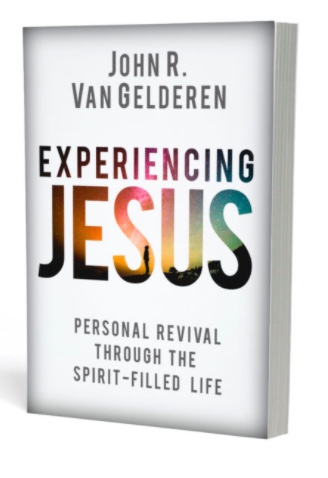
“Greater than any craving for food and water is the deep longing within the soul of many of God’s children to be like Jesus—to be holy and victorious over evil and to be loving and effective in service,” says John Van Gelderen. “In a word, to experience Christ’s life.”

If you’ve felt these longings, but are discouraged and defeated, separated from the life of Christ by the rising waters of failure, John provides hope and help. Laying down biblical stepping stones, he leads you on a journey to a life that overcomes sin and overflows into ministry to others—The Revived Life.

This book combines the brokenness truth of Roy Hession, the Spirit-filled life truth of Watchman Nee, and the spiritual warfare truth of Jesse Penn-Lewis.

from clcpublications.com

A System of Biblical Psychology – free online

delitzschBibleStudyTools.com has added a classic volume to their digital library. One of the most influential, scholarly treatments of man as spirit, soul and body is A System of Biblical Psychology, by Franz Delitzsch. (Trans. Robert E. Wallis. 2nd, English ed. Edinburgh: T. & T. Clark, 1885.) The clarifications to the doctrine of sanctification in Delitzsch have enriched many, including Evan Hopkins who wrote The Law of Liberty in the Spiritual Life (which represented the essential message of the early Keswick Convention in England). Sign up for a free account and access A System of Biblical Psychology and other resources at BibleStudyTools.com

The Weight of Grace

weight_of_grace_cover2-222x300

The subtitle of this workbook is Experience the Freedom from Overeating that You Already Have.

The author, Paula Coleman, includes a spirit/soul/body model of biblical psychology in this study–a Christ-centered approach to overeating / weight loss.

wog_tri

“The Weight of Grace can be used by individuals or small groups and contains an easy-to-use facilitator’s guide.  It is formatted in workbook style with spaces provided where women can write answers to application questions.” www.weightofgrace.org