An Expositor’s Example: William R. Newell

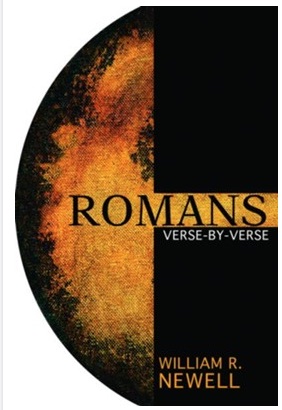
William R. Newell is an example of a well-respected Bible expositor who believed in man as spirit, soul, and body. Emmalon Davis comments that “Newell’s [Romans] Verse-by-Verse is a perfect combination of analytic exegesis and devotional interpretation … Because of Newell’s deep understanding of both Greek and English biblical translations, he is able to point out subtle yet essential features of the text that often go unnoticed by many readers. Throughout his commentary, Newell consistently defines difficult terminology and provides many additional footnotes for further technical clarification.” ccel.org/ccel/newell/romans/

Here are excerpts that show Newell’s discernment about the nature of man (emphasis added).

On Romans 1:9
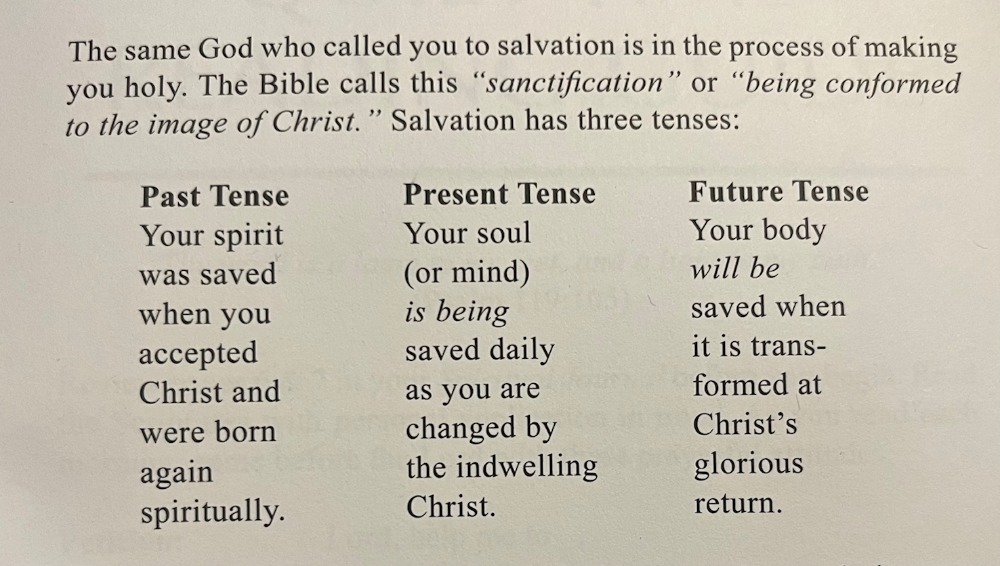
The expression, “Whom I serve in my spirit in the gospel of His Son,” is striking and significant. Those who would make man to consist of but two parts, soul and body, cannot properly explain “spirit and soul and body” (I Thess. 5:23); much less “the dividing asunder of soul and spirit” (Heb. 4:12). The constant witness of Scripture is that man exists as a spirit living in a body, possessed of a soul. Paul’s service to God was in his spirit, and therefore in the Holy Spirit, and never “soulical” (not psychikos, but pneumatikos— I Cor. 2:14; Jude 19, Jas. 3:15). Paul did not depend on music, or architecture, or oratory, or rhetoric. He did not hold “inspirational” meetings to arouse the emotions to mystic resolves. He served God directly, in his spirit. It was the truth in the Holy Ghost he ministered, and the results were “that which is of the Spirit.” The spirits of his hearers were born again; and the Spirit witnessed to their spirits that they were born-ones of God.

On Romans 8:12 [concerning creation, the fall, and regeneration]
God formed man’s body, first, calling: him man (Gen. 2:7). Then he breathed into his nostrils the breath (literally, spirit) of life; and man became a living soul. His bodily functions we all know. His soul-life put him in touch with the world into which by Divine creation he had now been introduced, but man was essentially a spirit, living in a body, possessing a soul. It was with his spirit that God communed and in which alone man was God-conscious.

Now when man sinned, all was overthrown! The body, that was to be the tabernacle of this Divinely inbreathed or created spirit, took immediate lordship. The life of God was withdrawn from man’s spirit. He had died to God! The spirit became the slave of the body; and the propensities of the latter, normal and controlled before, became the whole urge or driving force of man’s existence! His soul, also, which included his five “senses,”—which perceived and enjoyed the external universe; with his reason and imagination, became controlled by what God called “the flesh.” “The thoughts of man’s heart,” became “only evil and that continually [Gen. 6:5].”

Now in the new birth the dead spirit (dead to God) is by Divine creation made alive, or enlifed with Christ; and the Holy Spirit becomes the sphere of man’s newly created spirit; for whatever the believer’s progress may be, he is no longer in flesh but in Spirit! The body’s demands are the same as ever, because the body is not yet redeemed; and to live after the desires of the body—“according to flesh”

StudyLight.org provides Newell’s commentaries on Romans, Hebrews and Revelation and notes that “William Reed Newell (1868-1956) was a distinguished American theologian, pastor, and teacher known for his profound influence on evangelical Christianity in the early 20th century. Born in Savannah, Ohio, Newell exhibited a keen interest in the scriptures from a young age, a passion that would guide the course of his life and ministry … His most enduring legacy stems from his tenure at the Moody Bible Institute in Chicago, where he served as a teacher and later as the assistant superintendent. It was here that Newell’s impact on Christian education and evangelism was most felt, as he mentored countless students who would go on to become influential leaders in Christian ministry.”

JBW

Communion With God

.

Mark and Patti Virkler are founders of Communion with God Ministries. He is a charismatic evangelical educator, having authored 50 books on Christian living, discipleship and counseling.

Communion with God Ministries has a curriculum that recognizes man as spirit, soul and body (1 Thess. 5:23). Their main emphasis is the importance of spiritual communion with God and discerning His whisper while affirming the infallible authority of His inspirited Word, The Holy Bible.

An example of Virkler’s explicit affirmation of man’s design is found in the discussion of “Biblical Patterns for Approaching God” in their book, Dialogue With God. In describing the Tabernacle ritual in the Torah, he observes, “The three parts of the Tabernacle each correspond to the three-fold nature of man. The Outer Court signifies the body, the Holy Place illustrates man’s soul, and the Holy of Holies represents man’s spirit” (p. 124). (On this blog site, note others who have recognized this comparison, including Martin Luther: The Tabernacle Symbolism.)

The human spirit is recognized as man’s innermost being, born anew at salvation, joined to the Holy Spirit, and the primary organ of communion with God (Deliverance Pictured PDF; Naturally Supernatural, pp. 30,44,110,120,132,151). For example, in Prayers That Heal The Heart Mark observes, “In Psalm 37:7 we are called to ‘be still before the Lord and wait patiently for Him.’ There is a deep inner knowing in our spirits that each of us can experience when we quiet our flesh and our minds. Practicing the art of biblical meditation helps silence the outer noise and distractions clamoring for our attention.” p. 3).

The various books on counseling address the soul as the primary area in need of renewal and healing (Counseled by God, pp. 54, 101; Prayers That Heal The Heart, pp. xxi, 13,20).

Mark emphasizes physical health in the body in his book, Vibrant Health.

CWG also directs Christian Leadership University. In the past 30 years CLU has enrolled over 10,000 students in 127 nations of the world.

www.cwgministries.org/

Sanctification and Discipleship

I have been inspired by Billie Hanks Jr. and the importance of a 2 Timothy 2:2 disciple making strategy. “And the things that you have heard from me among many witnesses, commit these to faithful men who will be able to teach others also” (NKJV).

The mission statement of International Evangelism Association (IEA) is “to help churches and seminaries TRAIN DISCIPLE-MAKERS – to personally befriend and equip each new church member with the needed ministry skills to enjoy a lifetime of spiritual growth and evangelistic multiplication.”

The foundational one-to-one discipleship book that is used is A Call to Joy: Encouraging The Growing Believer. It is published in an expanded discipler’s and “Timothy” editions. A Call to Joy features seven weekly lessons, Inspirational Readings, and a month of daily Quiet Time devotions.

Day 30 is based on 1 Thessalonians 5:23,24: “Now may the God of peace Himself sanctify you completely; and may your whole spirit, soul, and body be preserved blameless at the coming of our Lord Jesus Christ.  He who calls you is faithful, who also will do it”(NKJV, emphasis added).

The devotional section states on page 107,

So this reputable ministry ministry sees the value of the spirit, soul, model of man.

The fifty years of IEA ministry continues to expand through equipping leaders internationally. “The Becoming a Disciple-Maker Lead Church strategy and friendship-based equipping process is now being taught for credit in Christian seminaries in North America, South America, Europe, and Asia. Dr. Hanks has followed in Trotman’s steps and is training IEA staff to do the same – teaching and training thousands of Great Commission minded pastors from many denominations how to close their “back doors” and “equip church members” to grow and multiply spiritually.”

Their disciple-maker curriculum is available in 25 languages
disciple-maker.org/product-category/disciple-making/one-on-one-training/

and also in a cloud-based digital edition. disciple-maker.org/app/

JBW

Three Aspects of Marriage

I have appreciated Steve Prokopchak’s audio seminar and workbook, Counseling Basics: Helping You Help Others.

Dove International introduces him:

“Steve serves on the DOVE International and DOVE USA Apostolic Councils and has been involved in the Christian counseling field for over 30 years. He earned a Master of Human Services from Lincoln University. He is the author of several books, including Called Together, a premarital counseling workbook. He also travels throughout the world teaching and imparting to the lives of many, especially leaders.”[1]

In his book, Called Together, man as spirit, soul and body is presented as biblical and significant in building a strong marriage in Christ.

Steve and Mary explain:

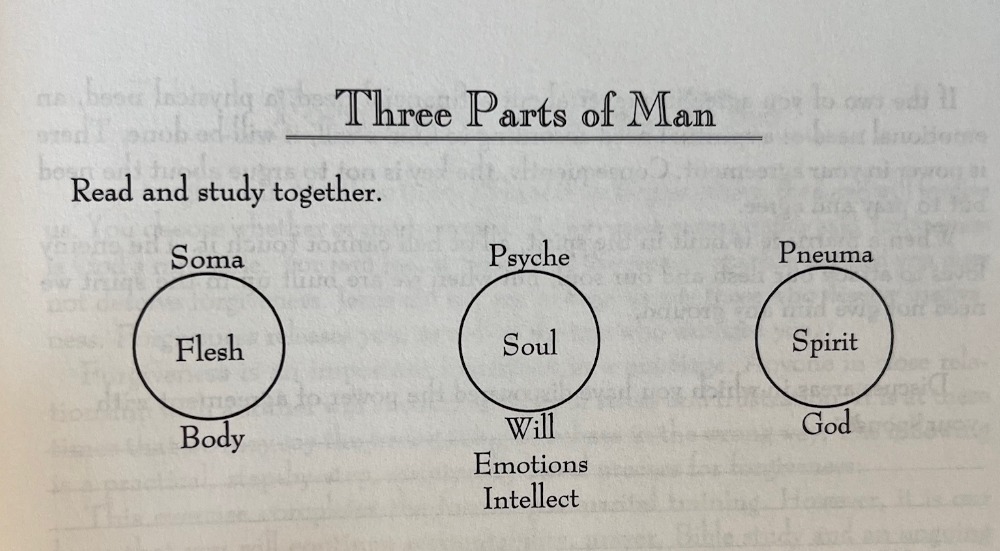
“We know God as Father, Son and Holy Spirit. Just as God is three in one, so is man whom He created. God has designed man with flesh, our body which will return to the dust of the earth (Genesis 3:19); soul, or will, emotions and intellect (Ezekiel 18:4; Matthew 10:28); and spirit (Psalm 51:10; John 4:23-24; 1Thessalonians 5:23; Hebrews 4:12).

“This illustration will help to clarify God’s design for marriage. If the marriage is built in the fleshly realm (the lust of the eyes, the lust of the flesh—1 John 2:16, KJV), it will not endure. Before long this marriage will experience tremendous difficulty. There is much more to a relationship than the physical act of sex.

“When a marriage is built in the soul realm, it may also be short-lived. Two college graduates may be able to communicate on a very intelligent level, but this alone will not be enough to sustain the relationship. If a decision to marry is made out of a strong will or during an “emotional high,” this too will soon fade.

“However, when a marriage is built in the spiritual realm, it is off to a powerful start. The Bible clearly indicates that God the Father, God the Son and God the Spirit agree as one (1 John 6:8). Amos 3:3 states, “Do two walk together unless they have agreed to do so?” (emphasis added). This agreement must first take place in the spiritual realm.”[2]

The dichotomist would agree with these observations but restrict them to adjectives or adverbs: physical, psychological, and spiritual. We believe that there are nouns behind these adjectives and adverbs.

Steve’s blog mentions his other books and ministry endeavors:

“Steve and Mary wrote Called Together, a unique pre and postmarital workbook designed for couple-to-couple mentoring use. Called Together Mentor’s Seminar is free online here. Their follow-up book, Staying Together, Marriage: A Lifelong Affair is designed to challenge and change married couples. Steve’s newest book, soon to be released is titled, Identity: The Distinctiveness of You. Steve also authored a series of booklets called People Helping People on counseling topics suitable for small groups. He co-authored the book The Biblical Role of Elders for Today’s Church and Battle Cry for Your Marriage. He is the author of the books Counseling Basics and In Pursuit of Obedience. Steve has had articles published in Ministries Today magazine.”[3]

JBW


1. https://dcfi.org/steve-mary-prokopchak/

2. Called Together, p. 131 https://store.dcfi.org/product_authors/mary-prokopchak/

3. https://steveprokopchak.com/

Exploring The Treasure – New Edition

Exploring The Treasure of Your New Human Spirit has just been published in a new paperback edition. It is available from Grace Fellowship International and Amazon.com

Endorsements:

Finally, someone has addressed both doctrinally and historically the key concerns and questions surrounding the exchanged life. The book is an absolute must for any person interested in understanding the exchanged life. I plan to recommend it at conferences and use it as required reading for all our staff and trainees at The Fold.
Fred Tomaselli. D.Phil., President, The Fold Family Ministries, Lyndonville, VT

This book is an important addition to our teaching. Dr. John Best presents not only the validity of the human spirit in addition to the soul and body, but argues well for the importance of this understanding in finding the victory and peace of the Christian life. The work is scholarly, allowing students the documentation for further study, and a good read for those who simply want to
understand Best’s perspective. We have needed a careful and caring presentation of the triune nature of humanity, and I’m happy to recommend this book for the serious Bible student.
Dave Orrison, Director, Grace for the Heart, http://www.gracefortheheart.org

Thank you, Dr. Best, for “committing what you’ve heard from God’s Word and heart to faithful men and women who will be able to teach on also” for years to come (2 Timothy 2:2)! I believe your book, Exploring the Treasure of Your New Human Spirit, is a gift to you, now to others… a most foundational book.
Gregg Gibbons, Director, Journey in Christ, Simpsonville. SC

I can’t overstate the importance of this volume. It is a theology book, and doctrine is important (2 Tim. 3:16). It is a book on biblical anthropology/psychology, and how people are made up is important. It is a book of practical application, and living a victorious life is important. What is more, precious little else has been written on the topic of man as spirit, soul and body in the last
century.
John Woodward, Director of Counseling, Grace Fellowship International, Pigeon Forge, TN

The Soul / Spirit Distinction in Repentance

Dutch Sheets is an influential Christian leader through his promotion of spiritual awakening and revival. Of his 23 books, Intercessory Prayer, is the best known, having sold over 1 million copies. Dutch Sheets also has a large audience through his blog, Give Him 15®

In his post titled “An Incredibly Harmful Misunderstanding” Dutch Sheets warns about reducing repentance to a change of mind, a decision of the will, or an emotion of remorse.[1]  (Each of these faculties refer to man’s soul.

In developing a more adequate definition of repentance Sheets goes into detail about how the Fall (Genesis ch. 3) affected the spirit of man and corrupted his inner governance. He writes,

Biblical repentance – a change of mind – is the result of revelation, which literally means “lift or remove that which hides or covers” (apakalupsis)(10). 2 Corinthians 4:3-4 tells us a veil or covering came to the heart of humans at the Fall, “blinding” us to God’s truth and perspective.

This occurred when Adam chose his own “knowledge of good and evil.” When he did, his own mind and intellect took over, gaining ascendancy over his fallen spirit, which had lost God’s life and Spirit. He no longer operated according to and under God’s truth and logic, but according to his own fallen, carnal, fleshly thoughts. Adam’s soul, his psuche(11) (Greek: mind, will and emotions) was now in charge. The New Testament actually calls fallen man a psuchikos(12), from psuche, this Greek word for soul. Usually translated “natural man,” it literally means “of the soul,”(13) referring to one who is led by their soul, not their spirit. In contrast, a “spiritual man” or person in the New Testament is pneumatikos(14), from pneuma(15), the word for spirit. Humans went from being pneumatikoses led from their spirit, which was filled with Holy Spirit and God’s life, to being psuchikoses, led by their souls and whatever information or emotions were held there. James actually tells us the knowledge that originates in this exalted psuche is “earthly, natural and demonic” (James 3:15). Unredeemed humans now live by and from this soulish knowledge, and Scripture tells us “A natural person [psuchikos – ‘man of soul’] does not accept the things of the Spirit of God, for they are foolishness [moria – ‘moronish’] to him; and he cannot understand them, because they are spiritually discerned” (1 Corinthians 2:14 NASB).

Since the Fall, because of this shift in power from spirit to soul, and the ensuing veil, we humans have needed revelation – “a lifting of the veil” – in order to see and understand truth, God’s logic, at a heart level. When this revelation occurs, THAT IS REPENTANCE! … The biblical process of change: Remorse, revelation and repentance, turn back to God.

Therefore, Dutch Sheets makes an explicit distinction between man’s soul and spirit as he explains the results of the fall and the need more spiritual revelation in true repentance.

JBW


[1] Givehim15.com, Jan 5 2024
Bold font added – JBW
Footnotes in the article “An Incredibly Harmful Misunderstanding”
10. James Strong’s Exhaustive Concordance, ref. no. 602.
11. Ibid., ref. no. 5590.
12. Ibid., ref. no. 5591.
13. Ibid., ref. no. 5590.
14. Ibid., ref. no. 4152.
15. Ibid., ref. no. 4151.


The Soul/Spirit Distinction in Spiritual Warfare

Dr. Charles Kraft is a leader in equipping believers for overt spiritual warfare. His publisher gives this biographical summary:

“Charles H. (Chuck) Kraft (www.heartssetfree.org) is retired from the faculty of the School of Intercultural Studies at Fuller Seminary (formerly the School of World Mission) after 40 years as professor of anthropology and intercultural communication. He taught anthropology, communication, contextualization, and spiritual dynamics (inner healing, deliverance, and spiritual warfare) to missionaries and prospective missionaries.

“He holds degrees from Wheaton College (BA anthropology), Ashland Theological Seminary (BD theology), and Hartford Seminary Foundation (PhD anthropological linguistics). He served as a pioneer missionary among a tribal group (Kamwe/Higi) in northeastern Nigeria for three years followed by five years each on the faculties of Michigan State University and UCLA, teaching linguistics and African languages.

“Kraft is the author of more than 30 books and numerous articles in the fields of his expertise. He is also an internationally renowned speaker and president of Deep Healing Ministries, which focuses on deep-level healing, deliverance and spiritual warfare. He has been used by God to lead thousands to spiritual and emotional freedom in Jesus Christ.”[1]

One of the controversial issues in dealing with spiritual warfare is question, Can a born again believer be demon possessed? The answer begins with clarifying the the New Testament does not use that term, rather the Greek word is daimonizomai —”demonized.”

In The Evangelical’s Guide to Spiritual Warfare Dr. Kraft gives a convincing case from Scripture and years of front-line ministry experience that in some cases born again believers are “demonized.”

“It [biblical revelation] means God has thrown light upon subjects which most of us started with the assumption that Christians cannot be demonized. But we soon discovered that we, like Jesus, have to evict demons even from people of faith. Though the demons in a Christian may be weaker than those in a non-Christian due to the spiritual growth of the Christian, they usually remain there until cast out.”[2]

Dr. Kraft gives further clarification on this controversial topic by appealing to the soul/spirit distinction in the believer.

“However, those who assume that Christians cannot be demonized are partly right. A demon cannot live in the Christian’s spirit. This is the person’s central core, the part that died when Adam sinned and the part that became the new nature when they came to Christ. The Holy Spirit now lives there, and demons have to leave. Demons can, however, still live in the body, mind, emotions and will of a Christian, the parts where sin also can still dwell. For some, the process of battling the enemy as they grow in Christ involves battling indwelling demons as well as overcoming sinfulness within.”[3]

In biblical psychology we consider “mind, emotions and will ” to be faculties of the human soul. Dr. Kraft elaborates further on this important distinction.

“As Christians, our spirit, the central part of us, has become sinless. We call this change in our spirit our new nature (see 1 John 3:9). If, then, a person is carrying demons when he or she comes to Christ, the demons cannot any longer inhabit his or her spirit or new nature.”[4]

Next, Dr. Kraft gives an example of how this interpretation was confirmed in spiritual warfare experience. Then he concludes,

“…that demons cannot live in that innermost part of a Christian, the spirit, since it is filled with the Holy Spirit (see Romans 8:16). That part of us becomes spiritually alive with the life of Christ and
is inviolable by the representatives of the enemy. As I have said, sin and demons can live in a Christian’s mind, emotions/body and will. We regularly have to evict them from those parts of Christians. I suspect, then, that the reason a demon can have greater control of an unbeliever is because it can invade the unbeliever’s spirit.”[5]

This book features ten endorsements, such as this one by Bill Payne, Ph.D., professor of evangelism and world missions, director of chaplaincy studies, Ashland Theological Seminary:

“Kraft offers an incredibly important resource for all who desire to engage in spiritual warfare. His training in missions, theology and cultural anthropology make him uniquely qualified to write on this topic. His practical experience gives him expert status. Once again he is on the cutting edge. I plan to use this book in my courses.”[6]

This example from Dr. Charles Kraft shows that another leading evangelical scholar is convinced that the Bible teaches the soul/spirit distinction. This is not just semantics; rather, this discernment has important value in practical ministry.


[1] http://bakerpublishinggroup.com/authors/charles-h-kraft/253

[2] Charles H. Kraft, The Evangelical’s Guide to Spiritual Warfare: Scriptural Insights and Practical Instruction on Facing the Enemy (Chosen Books / Baker, 2015), 137

[3] The Evangelical’s Guide to Spiritual Warfare, 137 emphasis added

[4] Ibid.138

[5] Ibid.138

[6] http://bakerpublishinggroup.com/books/the-evangelical-s-guide-to-spiritual-warfare/352190

I came to the same conclusion about how the soul/spirit distinction accurately answers the question, Can a born again believer be demonized? Man as Spirit, Soul, and Body: A Study of Biblical Psychology, pp.143-46.

-John Woodward

Three Aspects of Walking with God


Walking with God: Wholeness & Holiness for Common Christians uses the three aspects of man’s makeup an an outline for this vital topic.

The author, W. Phillip Keller (1920-97), “grew up in Africa as the son of missionary parents. Since then he has traveled extensively throughout the world as a nature photographer and agronomist. His more than thirty-five Christian books include the best-seller A Shepherd Looks at Psalm 23 (now with more than two million copies in print), God is My Delight, Strength of Soul, and Outdoor Moments with God.”

From the Publisher: “This book is for ‘the weary and worn who have lost their way and are uncertain where to turn.’ It allows us to see who we are, what direction we are taking, and where our destination will be.”

The first chapter begins with a clear statement of the author’s appreciation of holistic trichotomy:

“The Word of God makes clear to us that man is a tripartite being. This is both a divine declaration and a spiritual revelation. By that is meant that it is not the view held by science or man in his unregenerate condition.

The Scriptures show that man has three distinct and separate realms to his makeup. They are spirit, soul, and body. These are closely interrelated. They interact in remarkable complexity; yet each has its own unique functions or capacities.

For purposes of simplicity and clarity, each of the three areas will be treated separately in this book. We will observe how we walk with God in our spirits, in our souls, and in our bodies. At the same time, it has to be borne in mind that the three are so closely intertwined that each exerts great influence upon the others…” [1]

For Keller, discerning the Scriptural teaching of man as spirit, soul, and body was not a trivial issue. Rather, this view was central to his explanations and applications about how to walk with God and grow in progressive sanctification.

JBW


[1] W. Phillip Keller, Walking with God (Fleming H Revell, 1980), p. 29


Uncommon Thoughts

In his book, Uncommon Thoughts About Commonly Held Beliefs, Glenn Murray covers helpful grace-oriented discipleship insights in 31 chapters.[1]  His subtitle for this book is Insights from my half-century journey with Jesus. In addition to the endorsement by Os Guinness on the cover, there are ten additional written commendations of the author and this volume. John Park, Ph.D. (professor of Theology and Ethics at Azusa Pacific University) affirmed, “This book has a profound balance in Christian orthodoxy and orthopraxis. An indispensable book that all people should read!”

Chapter 7 is devoted to considering 2 Corinthians 5:17: Therefore, if anyone is in Christ, he is a new creation; old things have passed away; behold, all things have become new” (NKJV). Murray has found the model of man as spirit, soul, and body to be an important perspective in accurately interpreting this profound verse. However, he acknowledges that trichotomy is not always accepted:

“Before I go on, let me acknowledge that some good theologians believe that the soul and spirit are the same thing. I respectfully disagree with their conclusion and will explain why I don’t hold that view. In the late 1960s, prayer, the study of the Scriptures, and what the early Church fathers taught, formed my view of this subject. Additionally, Ray Stedman, a Bible teacher that I trusted, confirmed my conclusions. As mentioned earlier, the soul and spirit are closely related, but the Bible makes an explicit distinction between them. In 1 Thess. 5: 23, it’s very specific. “May your whole spirit and soul and body be kept blameless until our Lord Jesus Christ comes again.” (NLT) I acknowledge that at times, it’s difficult to discern the difference between the soul and spirit. However, Scripture does identify each and says that the Word of God will help us differentiate between them. “For the word of God is living and effective and sharper than any double-edged sword, penetrating as far as the separation of soul and spirit. (Heb. 4: 12 HCB)”

Murray then proceeds to logically evaluate what aspects of man have became radically new in Christ: body, mind, emotions, will…? Then he concludes,

“I now confidently believe that my spirit, which is the center of my being, is a new creation. As I remain soft and pliable, God will make my soul increasing more congruent with my spirit. By faith, I believe this, but too often I subconsciously revert to thinking that the real me is my soul and body, which has not yet been renewed. My tendency is to let my mind and emotions tell me that since my soul still has wrong motives, thoughts, and actions, I am not a new creation. The solution for this is to trust my unredeemed mind and emotions less and to believe by faith what God says about me. Therefore, it’s completely a faith issue. And that’s a good thing because the Bible tells us, “Without faith it’s impossible to please God” (Heb. 11: 6) Over time I have come to strongly believe that in my spirit I’m a new creation while my body and soul retain the human frailties that resulted from the disobedience of my “grandparents” Adam and Eve. (Eph. 1: 13-14)”

In this chapter the author accurately defines the threefold nature of man, noting how this sheds light on creation, the fall, redemption and sanctification.

__________

[1] Glenn Murray, UNCOMMON THOUGHTS ABOUT COMMONLY HELD BELIEFS: Insights from my half-century journey with Jesus (2019). Available in paperback and Kindle ebook

An M.D. Advocating 3D Health

Rick Tague, M.D., M.P.H. & T.M. is a nutrition & weight loss specialist and the Founder & Medical Director of the Center for Nutrition and Preventive Medicine with weight loss clinics in Kansas City & Topeka.

On his web site he uses this Wheel diagram. He begins with an affirmation of the non-physical aspect of a person: “[This article] discusses the aspects of humans that cannot be measured, but are essential for health. You see, as a physician with a reflective and analytical nature, I am convinced that there is a very important non-physical aspect to each of us that makes us who we are. Further, this must be acknowledged and discussed if we are to seek after ‘whole person’ optimum health.”

After defining the body, soul and spirit, he makes a good case for holistic health to minimize the risk of illness and improve well being. He summarizes,

“Once considered, the interactions between body, soul and spirit are apparent. To achieve great physical health, also pursue health in soul and spirit. Seek optimum health in all areas of life. Your efforts, pursued with passion, sincerity, and wisdom, will be honored and rewarded. May your life be richly blessed as you pursue health and what is true, right and good in your life.”


DrTague.com