The Brain: Marvel and Metaphor

God has created us with amazing brains (which hopefully our minds use quite a bit). It is marvelous. (However, an examination of the physical aspects of the brain, its amazing design (such as the the right and left hemispheres) and functionality is a separate study.)

Material and immaterial aspects: brain and mind

The physical brain is obviously in the material aspect of a person, yet the mind comprises the immaterial side.

A materialistic worldview denies the spiritual aspect of life. Yet even scientific research shows the inadequacy of materialism. Heather Zeiger observed,

“The results of experiments with OCD, phobias, depression, and the placebo effect do not make sense to materialists because the mind seems to affect the physical brain. However, we know from Scripture that the mind, or the soul, is an essential part of our being. James 2:26 and Luke 8:55 show us that when the soul leaves, the body is dead, and when the soul returns, the body is alive. Also, passages such as Matthew 26:41 and Romans 8:10 and 11 tell us that our spirit can affect what our bodies do and keep us from sinning. Passages about the resurrection such as in 1 Corinthians 15 discuss the distinction between our spirit and our physical body.” [1]

Non-physical aspects of man

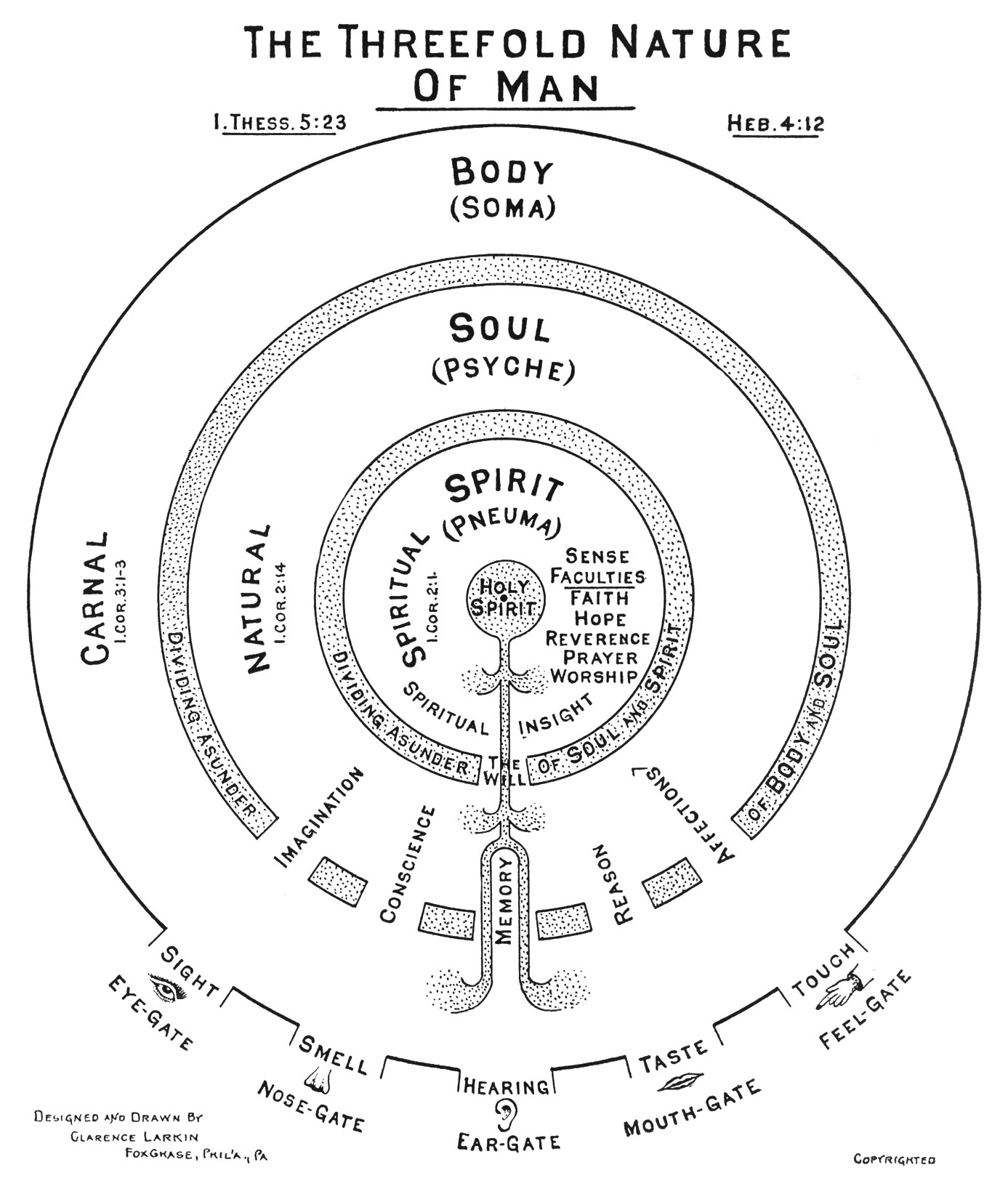
In a more precise understanding of how we are made, the immaterial aspect of man has two distinguishable parts–soul and spirit (1 Thess. 5:23).

The human spirit is distinct from the soul. Note the need for spiritual revelation in addition to the natural mind: “For what man knows the things of a man except the spirit of the man which is in him? Even so no one knows the things of God except the Spirit of God. Now we have received, not the spirit of the world, but the Spirit who is from God, that we might know the things that have been freely given to us by God. These things we also speak, not in words which man’s wisdom teaches but which the Holy Spirit teaches, comparing spiritual things with spiritual. But the natural man [literally, “soulish man]” does not receive the things of the Spirit of God, for they are foolishness to him; nor can he know them, because they are spiritually discerned” (1 Cor 2:11 -14).

Hebrews 4:12 affirms, “For the word of God is living and powerful, and sharper than any two-edged sword, piercing even to the division of soul and spirit, and of joints and marrow…”  In the immaterial side of a person, the human spirit can be conceived as “in” –yet distinct from–the soul. Similarly, the marrow is in the bone, yet not all bone is marrow.

In the passage about the proper use of spiritual gifts the apostle Paul states, “For if I pray in a tongue, my spirit prays, but my understanding is unfruitful” (1 Cor. 14:4). In this scenario, the human spirit is engaged in speaking an unlearned language that is not intelligible in the natural (soulical) mind.

Illustrations of material and immaterial aspects of man

Although no analysis or illustration completely describes the nature of man, illustrations can be useful. The most familiar one is that the believer is compared to the Old Testament Temple–God’s dwelling place. “Or do you not know that your body is the temple of the Holy Spirit who is in you, whom you have from God, and you are not your own?” (1 Cor. 6:19). The Tabernacle and (later) Temple had an outer court, Holy Place and Holy of Holies. These illustrate the human body, soul and spirit respectively. See the section of BiblicalPsychology.net devoted to the symbolism of the Tabernacle.

A contemporary illustration of body, soul and spirit is the design and function of the “brain machine” known as a computer.

The physical brain is like a computer’s hardware Humanity has used their brains to invent an inferior brain-like machine, the computer, that has become a huge part of modern life.

The soul is like a computer’s software.  The machine is useless without installed programming–software. Software is similar to the the human soul (made, will, and emotions).

The human spirit is like electricity.  Without electricity the hardware and software have no “life.” As electricity is distinct from the computer’s software, likewise, the human spirit is distinct from the soul.

A science course observes, “Both [a computer and the brain] use electrical signals to send messages. The brain uses chemicals to transmit information; the computer uses electricity. Even though electrical signals travel at high speeds in the nervous system, they travel even faster through the wires in a computer. Both transmit information.”[2]

Christian psychiatrist and Bible teacher, Dr. Tim Jennings, uses this computer analogy (hardware, software and electricity) to illustrate the distinctions of body, soul and spirit.[3]

The human brain is a marvel. 

“I will praise You, for I am fearfully and wonderfully made;
Marvelous are Your works,
And that my soul knows very well” (Psalm 139:14 NKJV).

The brain is also a metaphor when compared to a computer, and the computer can illustrate the interdependent (yet distinct) body, soul and spirit.


by John Woodward

[1] The Spiritual Brain” by Heather Zeiger, July 5, 2008
https://probe.org/the-spiritual-brain/

[2] (secular} https://faculty.washington.edu/chudler/bvc.html

[3] Cited from Dr. Jennings seminar, “God and Your Brain.” See ComeAndReason.com

For More on the marvels of the brain, see Cross-Wired Mind: A Study for Finding a Right Relationship with God through the Mind He Intended Us to Have, by Mary Kay Thomas at http://fbcproctorville.com/

Interchangeable Terms: An Explanation and Defense

One of the criticisms of the view of the trichotomous nature of man is that sometimes soul and spirit are used interchangeably. Although there is a consensus that the connotation of man’s “spirit” relates to God (who is Spirit) and soul connotes the psychological aspect (as indicated by the English term “psychology”), there is resistance to believing that man’s spirit and soul are ontologically distinct. Note that the primary use of these terms as nouns in Scripture (pneuma and psuche is consistent with their familiar use as English adverbs and adjectives.

The dichotomist view is that the nouns spirit and soul are merely synonyms. There is a difference in emphasis and function of man’s immaterial side. One of the main reasons for this view (that became mainstream after Augustine) is that sometimes these terms seem to be used in a synonymous or interchangeable manner.

The Reason for overlapping usage of spirit and soul

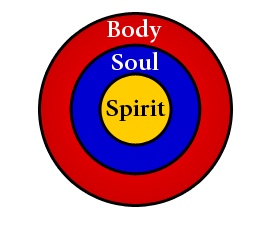
The reason for occasional overlapping of these terms is that, conceptually, just as the immaterial aspect of man is “in” the body, so the human spirit is “in” the soul. This model can be illustrated by concentric circles.

So, if a reference that may be expected to use the term “spirit” may use “soul” instead, this would not contradict a more precise meaning of these terms.

A biblical illustration of the subtle distinction of spirit and soul is the Old Testament Tabernacle (and later, the Temple).

The Tabernacle was one building, yet with two distinct rooms. Only a curtain separated them. Similarly, the believer, who is a “temple of the Holy Spirit” (1 Cor. 6:19) has two aspects of his immaterial being–soul and spirit. The whole Tabernacle would be considered The Holy Place, yet the innermost room was distinct as The Holy of Holies.[1]

A Defense of Trichotomy in light of some overlapping of terms

In another post (Sept. 4, 2022), Lehman Strauss made the case for man as spirit, soul and body by noting that he is made in God’s image. God is three-in-one, the Trinity. Now we consider a parallel between our biblical evidence for God being Triune and man as a triune being created in His image.[2]

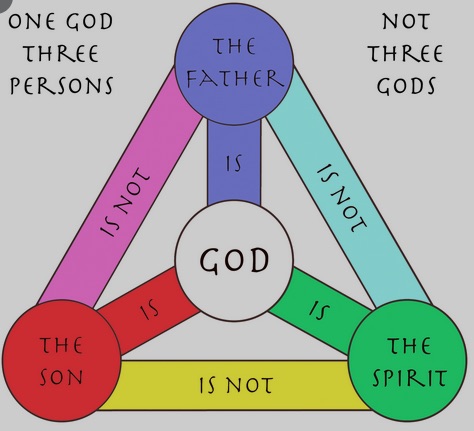
If some interchangeable use of soul and spirit disproves man as trichotomous, the same argument could be used to dispute the doctrine of the Trinity (and we accept the biblical view of God as triune). Consider these theological basics.

God is one: “Hear, O Israel: The Lord our God, the Lord is one!” (Deut. 6:4).

The first person of the Godhead is the Father (John 5:16-45). The Father and the Son are distinct ontologically, yet are one God (Heb 1:1-3; John 11:1,14).

The Father and the Son are ontologically distinct from the Holy Spirit. “And I will pray the Father, and He will give you another Helper, that He may abide with you forever— the Spirit of truth, whom the world cannot receive, because it neither sees Him nor knows Him; but you know Him, for He dwells with you and will be in you” (John 14:16,17).

The Father, Son, and the Holy Spirit are distinct persons in the Godhead. “When He had been baptized, Jesus came up immediately from the water; and behold, the heavens were opened to Him, and He saw the Spirit of God descending like a dove and alighting upon Him. And suddenly a voice came from heaven, saying, “This is My beloved Son, in whom I am well pleased” (Matt. 3:16; see Acts 1:4,5).

Now we observe that the names of the Godhead are sometimes used interchangeably.

The Son is prophetically called “The Everlasting Father” in Isaiah 9:6. In John 10:30 “Jesus declared ‘I and My Father are one.'” John 14:8,9 records, “Philip said to Him, ‘Lord, show us the Father, and it is sufficient for us.’ Jesus said to him, ‘Have I been with you so long, and yet you have not known Me, Philip? He who has seen Me has seen the Father; so how can you say, “Show us the Father”‘?”

God the Father is “spirit” and “holy.” “God is Spirit, and those who worship Him must worship in spirit and truth” (John 4:24). “Holy Father…” (John 17:11).

The Holy Spirit is sometimes called the Spirit of Christ. “Of this salvation the prophets have inquired and searched carefully, who prophesied of the grace that would come to you, searching what, or what manner of time, the Spirit of Christ who was in them was indicating when He testified beforehand the sufferings of Christ and the glories that would follow” (1 Pet 1:10,11).
“But you are not in the flesh but in the Spirit, if indeed the Spirit of God dwells in you. Now if anyone does not have the Spirit of Christ, he is not His. And if Christ is in you…” (Rom. 8:9,10)
“And because you are sons, God has sent forth the Spirit of His Son into your hearts, crying out, ‘Abba, Father!’” (Gal 4:6. See Gal. 2:20).

The Son is described as life-giving spirit. “And so it is written, ‘The first man Adam became a living being.’ The last Adam [Jesus, Son of God] became a life-giving spirit” (1 Cor. 15:45).

Although the names of the Godhead are sometimes used interchangeably, God’s unity is maintained: “Go therefore and make disciples of all the nations, baptizing them in the name [singular] of the Father and of the Son and of the Holy Spirit” (Matt. 28:19).

Conclusion

Since the occasional interchangeable use of the terms Father, Son (Christ) and Holy Spirit does not disprove God’s triune nature (the Trinity doctrine), even so, some interchangeable use of soul and spirit does not disprove man as triune (ontologically spirit, soul and body). [3]

-JBW


[1] For more on the symbolism of the Tabernacle and sample quotations from five authors, see this blog site’s heading–“The Tabernacle.”

[2] The three aspects of man need not require a de-emphasis of his fundamental unity. We maintain that man is one in personhood, with two separable sides, yet three distinguishable aspects — holistic trichotomy. Just as the dichotomist can emphasize the holistic nature of man while accepting the biblical teaching that he has a material side and immaterial side (e.g., 2 Cor. 5:8), so the trichotomist can and should be holistic as well.

[3] This conclusion is based on inductive biblical theology, the testimony of expositors, and is consistent with the view of the early church (before Augustine).


Man is Made in the Image of the Triune God

“Then God said, ‘Let Us make man in Our image, according to Our likeness; let them have dominion over the fish of the sea, over the birds of the air, and over the cattle, over all the earth and over every creeping thing that creeps on the earth.” So God created man in His own image; in the image of God He created him; male and female He created them” (Gen. 1:26,27).

“And the Lord God formed man of the dust of the ground [material aspect], and breathed into his nostrils the breath of life [spiritual aspect]; and man became a living being [psychological aspect]” (Gen. 2:7). Yet man is considered one in personhood.

One of the implicit evidences of man as spirit, soul and body is that he/she is made in the image of God, who is triune. Dr. Lehman Strauss included this reasoning in his series about “Dead and Afterward.” He affirmed:

Man is a triune being because he is created in the image of God. “God said, Let us make man in Our image” (Genesis 1:26). We know that God is a Trinity. The Holy Trinity is clearly set forth in the Apostle Paul’s benediction that closed his Second Corinthian Epistle: “The grace of the Lord Jesus Christ, and the love of God, and the communion of the Holy Ghost, be with you all. Amen” (2 Corinthians 13:14). Our Lord Himself said, in what we call “The Great Commission”: “Go ye therefore, and teach all nations, baptizing them in the name of the Father, and of the Son, and of the Holy Ghost” (Matthew 28:19). Created in the image of God, man is likewise a trinity. He has a spiritual nature that is separate and distinct from the body in which it dwells.

The two following passages from the Bible clearly establish the fact that man is a triune being composed of spirit, soul, and body:

I pray God your whole spirit and soul and body be preserved blameless unto the coming of our Lord Jesus Christ (1 Thessalonians 5:23).

For the word of God is quick, and powerful, and sharper than any two edged sword, piercing even to the dividing asunder of soul and spirit, and of the joints and marrow (body), and is a discerner of the thoughts and intents of the heart (Hebrews 4:12).

In spite of the erroneous teaching of “Jehovah’s Witnesses” and of other false sects that “no man has a soul,” the Bible states emphatically that man was created a trinity of spirit, soul, and body even as the eternal God is Himself a trinity of Father, Son, and Holy Ghost. The trinity of man is an essential part of the image relationship between him and God. Life is not ultimately physical and the body is not the whole man. And we might add that neither the body in itself, nor the soul in itself, nor the spirit in itself makes up the whole man, but he is “spirit and soul and body.” This must be seriously considered and definitely agreed to before we can comprehend with any accuracy the subject of life after death…[1]

Although God’s three-in-one nature is not conclusive proof of man’s triunity, it should be considered supporting evidence in favor of holistic trichotomy.


[1] Lehman Strauss, an excerpt from “Man A Trinity (Spirit, Soul, Body)”
https://bible.org/seriespage/2-man-trinity-spirit-soul-body

Lehman Strauss (1911-1997) taught Old Testament history for eight years at Philadelphia Bible Institute, and for 18 years served as pastor of the Calvary Baptist Church in Bristol, Pennsylvania.

The Meaning of Man’s “Spirit” in the N.T.

Word_Study_DictionaryGreek expert, Dr. Spiros Zodhiates, was General Editor of The Complete Word Study Dictionary: New Testament. This quote is part of the article that defines the New Testament use of “spirit” as it relates to biblical psychology:

Spirit (Pneuma) B) rational spirit…element of life. 1) Generally, spirit distinct from the body and soul. See also Luke 1:47; Hebrews 4:12. Soul and spirit are very closely related because they are both immaterial and they both contrast with body (soma) and flesh (sarx). Scripture, however, introduces a distinction between the two immaterial aspects of man’s soul and spirit. They that they cannot mean the same thing is evident from their mention together in 1 Thess. 5:23: spirit, soul, body. The same distinction is brought out in Hebrews 4:12. The spirit is man’s immaterial nature which enables him to communicate with God, who is also spirit. 1 Corinthians 2:14 states that “the natural man receiveth not the things of the Spirit of God” because “they are spiritually discerned.” What is translated “natural man” in Greek is psuchikos, or … soulish, meaning the soul of man. The soul is the aspect of his immaterial nature that makes him aware of his body and his natural, physical environment. The difference between soul and spirit is not one of substance [both are the immaterial side]  but of operation.”

Thus, this reference book agrees with holistic trichotomy: man is one in personhood with two divisible parts (material and immaterial), yet three distinguishable parts (spirit, soul and body).

“Spirit”. The Complete Word Study Dictionary: New Testament. Gen Ed. Spiros Zodhiates with Dr. W. Baker, and Dr. G. Hadjiantoniou, (Chattanooga, AMG Publishers, 1993). Bracketed words added

The Spiritual Believer

Neil Anderson gives a summary of the spiritual life with spirit, soul and body discernment.


See Galatians 5:22-23: “The fruit of the Spirit is love, joy, peace, patience, kindness, goodness, faithfulness, gentleness, self-control; against such things there is no law.”

The spiritual person also has a body, soul and spirit. Yet this individual has been remarkably transformed from the natural person he was before spiritual birth. At conversion, his spirit became united with God’s Spirit. The spiritual life which resulted from this union is characterized by forgiveness of sin, acceptance in God’s family, and the realization of personal worth.

The soul of the spiritual person also reflects a change generated by spiritual birth. He can now receive his impetus from the Spirit, not just from the flesh. His mind is being renewed and transformed. His emotions are characterized by peace and joy instead of turmoil. It is our responsibility to choose not to walk according to the flesh, but to walk according to the Spirit. As the spiritual person exercises his choice to live in the Spirit, his life bears the fruit of the Spirit (Galatians 5:22, 23).

As a spiritual person, your body is the dwelling place of God. We should offer our bodies as a living sacrifice of worship and service to Him. The flesh, conditioned to live independently from God under the old self, is still present in the spiritual person. But he responsibly crucifies the flesh and its desires daily as he considers himself dead to sin.

“That all looks and sounds great,” you may say. “But I’m a Christian and I still have some problems. I know I’m spiritually alive, but sometimes my mind dwells on the wrong kinds of thoughts. Sometimes I give in to the deeds of the flesh. Sometimes I entertain the desires of the flesh instead of crucifying them.”

The description of the spiritual person is the ideal. It’s the model of maturity toward which we are all growing. God has made every provision for you to experience personally the description of the spiritual person in His Word (2 Peter 1:3). You will grow as a spiritual person and glorify God in your body as you learn to crucify the flesh and be filled by the Spirit.

Prayer: Loving Lord, it is liberating to know that Your Spirit actually dwells in me. I choose to walk as a spiritual person today.

from Daily in Christ, by Neil and Joanne Anderson, June 17. Bold added for emphasis – JBW

https://freedominchrist.com/search.aspx?find=daily+in+christ

Donald Grey Barnhouse on the Topic of Man as Spirit, Soul, and Body

This highly respected pastor, author and radio Bible teacher taught, based on inductive Bible study, that man is a tripartite being. He considered this not an insignificant issue, but an important doctrine, especially in understanding how to have victory ovet the temptations of “The World, The Flesh and the Devil.” He wrote as follows:

THREEFOLD ATTACK

In this chapter, we shall show that the enemy attacks us from these different angles because man is a threefold being. We will then show the nature of the difference between these three temptations, and finally, we will show the methods set forth by the Word of God through which the Christian may have victory in each of the three spheres.

When God created Adam, the act of creation is described as follows: “And the Lord God formed man of the dust of the ground, and breathed into his nostrils the breath of life; and man became a living soul” (Genesis 2:7). The verse reveals to us that the body was made of the dust of the ground, that the spirit came from the breath of God, and that the combination produced the soul. It would be correct, in the light of this verse, for a man to say, “I am a soul, I have a body and I have a spirit.”

There have been many theologians who have denied the tripartite nature of man. They find no difference between the soul and the spirit. However, the Word of God definitely does make such a difference, and we shall see that the difference is an important one in the psychology [in] back of the differences in temptations that come to a man. One of the most obvious verses which tells us how we are to distinguish between soul and the spirit is in the epistle to the Hebrews: “The Word of God is living and powerful, sharper than any two—edged scalpel, piercing even to the division of soul and spirit, of joints and marrow, and is the critic of the thoughts and intentions of the heart” (Hebrews 4:12).

BODY, SOUL AND SPIRIT

We shall give only a brief summary of the use of the words body, soul and spirit, for it will not only be instructive for our purpose, but will also show the extent of the task. [See the PDF for the Hebrew and Greek word studies that distinguish soul and spirit.]

…Man is a soul, and as a soul he conserves his own identity though he may have the same name as other men. John Smith on Third Avenue does not get himself confused with John Smith on Fourth Street. The Post Office department may send their mail to the wrong addresses, but if they are sober, they get to their right homes. So do the animals, for our Lord pointed out “the foxes have holes, and the birds of the air have nests” (Matthew 8:20), and we know from observation that each goes to his own home and it is never confused with any other. Evidently an animal or a bird has an individuality as distinct as that of man. The soul is self-consciousness.

MAN’S SPIRIT

The soul, which is the self, the ego, the I, has a spirit… This is what was breathed into Adam when he was created, and this is that which distinguishes man from animals.

No man, be he ever so low in the scale of human intelligences, ever failed sooner or later to recognize that there was something about him and superior to him. Aristotle said that “man is by nature a political animal”; Seneca said that “man is a social animal,” and in another place, “man is a reasoning animal.” Chrysostom said “man is a gentle animal,” and Augustine called him “an earthly animal.” There may be a measure of truth in all of these, but it would be far closer to the truth as revealed in the Scriptures which use the word “soul” and “spirit” to say that man is a religious animal. We substantiate the use of the word “animal” by the usage of the word “soul,” and we substantiate the word “religious” by the usage of the word “spirit.”…

SPIRITUAL PSYCHOLOGY

There is, indeed, a great need for a detailed study of spiritual psychology (note the union of our two words in that phrase), but this is sufficient to establish the fact that man is a soul and that he has a spirit. We do not need to expand the fact that he also has a body. It is, indeed, the body that is the foundation that holds the other two in place so that if the body be destroyed the soul and spirit depart.

Why, then, do some theologians claim that there is no difference between soul and spirit? For much of popular theology is founded on the dichotomy of man into body and soul, rather than on the Biblical trichotomy of body, soul and spirit. Perhaps an illustration will explain. When man was created, he was somewhat like a three-storied house. After the fall, he was more like those houses which had gone through bombing: the third story had fallen into the second; the walls of the second were gaping so that a passerby might see the debris of the two–the house might still be fit for dwelling. When Adam sinned, the Spirit of man fell down into his soul. The two are almost inseparable in the unregenerate.

There is no adjective in our language for the word soul. Previous students have seen the need for such a word, and the great dictionaries give us soulish, but mark it obsolete for more than a century. In the Greek of the New Testament there is such an adjective. The spiritual concepts of lost men are really soulish concepts. They rise from the natural (soulish) man that receiveth not the things of the spirit (1 Corinthians 2:14). We do not need to press the obvious analogy that the body is like a cracked wall. In view of the confusion of soul and spirit in the unsaved man, is it not comprehensible that philosophers and theologians have thought that they were one and the same? It is the Word of God that divides the two asunder.

A NEW SPIRIT

When a man is born again, the work of the Holy Spirit plants within him a new spirit. It is a new third story that is held from above by the power of God. As the old man was three-stories held up by the body, and always bearing downward by what we might call a soulish, gravitational pull, so the new man is three stories with the center of his being in the new spirit and is always being pulled upward by a spiritual, magnetic attraction. The Christian life is the development of the forces of the new spirit so that their influences come to combine the whole soul and being of the Christian. “I” am crucified with Christ, means that the old soul has to be dealt with in the only way that will bring any change. “Nevertheless I live” means that the life from above is penetrating the fastnesses of the soul and that the sphere of victory is being enlarged constantly in the life of the believer.

Satan’s entire strategy is, therefore, directed to continuing the confusion of soul and spirit and of using every artifice possible to increase the pull of the flesh which lusteth against the spirit [Gal. 5:16]. Because of the tripartite nature of man, the devil has arranged his attacks to assault each phase of man’s being. Against the body, he brings the temptations of the flesh. Against the soul he brings the temptations of the world. Against the spirit, he comes himself, even though through one of his lesser agents, seeking to win the allegiance of the old spirit to a worship of himself. It is thus important that we distinguish sharply between the three types of temptations. Failure to do so is in itself a victory for the enemy.


from The Invisible War: The Panorama of the Continuing Conflict Between Good and Evil, chapter 21, pp. 172-175. Bold font added for emphasis – JBW
By Donald Grey Barnhouse
(Zondervan, 1965)

Donald Grey Barnhouse (March 28, 1895 – November 5, 1960), was an American Christian preacher, pastor, theologian, radio pioneer, and writer. He was pastor of the Tenth Presbyterian Church in Philadelphia, Pennsylvania from 1927 to his death in 1960. He earned degrees from Biola University snd Princeton Theological Seminary. (Wikipedia)

Spirit versus Flesh

“I Am Not My Flesh”

“for we [who are born-again have been reborn from above—spiritually transformed, renewed, set apart for His purpose and] are the true circumcision, who worship in the Spirit of God and glory and take pride and exult in Christ Jesus and place no confidence [in what we have or who we are] in the flesh” (Phil 3:3 Amplified Translation),

This short video demonstrates how discerning the spirit/soul/body aspects of man gives clarity to defining “the flesh.” Courtesy of VCLI.org

Three Degrees of Religious Knowledge – A. W. Tozer

knowledge

From Man: The Dwelling Place of God (Christian Publications, Inc., 1966).

In our knowledge of Divine things three degrees may be distinguished: the knowledge furnished by reason, by faith and by spiritual experience respectively.

These three degrees of knowledge correspond to the departments of the tabernacle in the ancient Levitical order: the outer court, the holy place and the holy of holies.

Far in, beyond the “second veil,” was the holiest of all, having as its lone piece of furniture the Ark of the Covenant with the cherubim of glory shadowing the mercy seat [Exodus 26:33]. There between the outstretched wings dwelt in awesome splendor the fire of God’s presence, the Shekinah. No light of nature reached that sacred place, only the pure radiance of Him who is light and in whom there is no darkness at all [1 John 1:5]. To that solemn Presence no one could approach except the high priest once each year who blood of atonement.

Farther out, and separated by a heavy veil, was the holy place, a sacred place indeed but removed from the Presence and always accessible to the priests of Israel. Here also the light of sun and moon was excluded; light was furnished by the shining of the seven golden candlesticks.
The court of the priests was out farther still, a large enclosure in which were the brazen altar and the laver. This was open to the sky and received the normal light of nature.

All was of God and all was divine, but the quality of the worshipper’s knowledge became surer and more sublime as he moved in from the outer court toward the mercy seat and the Presence, where at last he was permitted to gaze upon the cherubim of glory and the deep burning Fire that glowed between their outstretched wings.

All this illustrates if it does not typify the three degrees of knowledge possible to a Christian. It is not proper that we should press every detail in an effort to find in the beautiful Old Testament picture more than is actually there; but the most cautious expositor could hardly object to our using the earthly and external to throw into relief the internal and the heavenly.

[Body – external, observed knowledge]

Nature is a great teacher and at her feet we may learn much that is good and ennobling. The Bible itself teaches this: “The heavens declare the glory of God; and the firmament shows his handiwork. Day unto day utters speech, and night unto night shows knowledge” [Psalm 19:1,2]. “Go to the ant, thou sluggard; consider her ways, and be wise” [Prov. 6:6]. “Behold the fowls of the air” [Matt. 6:26]. “For the invisible things of him from the creation of the world are clearly seen, being understood by the things that are made, even his eternal power and Godhead” [Rom. 1:20] Reason working on data furnished by observation of natural objects tells us a lot about God and spiritual things. This is too obvious to require proof. Everyone knows it.

[Soul – revealed knowledge]

But there is knowledge beyond and above that furnished by observation; it is knowledge received by faith. “In religion faith plays the part by experience in the things of the world.” Divine revelation through the inspired Scriptures offers data which lie altogether outside of and above the power of the mind to discover. The mind can make its deductions after it has received these data by faith, but it cannot find them by itself. No technique is known to man by which he can learn, for instance, that God in the beginning created the heaven and the earth or that there are three Persons in the Godhead; that God is love or that Christ died for sinners, or that He now sits at the right hand of the Majesty in the heavens. If we ever come to know these things it must be by receiving as true a body of doctrine which we have no way of verifying [2 Pet 1:20,21]. This is knowledge of faith.

[Spirit – illumined, confirmed spiritual knowledge]

There is yet a purer knowledge than this; it is knowledge by direct spiritual experience. About it there is an immediacy that places it beyond doubt. Since it was not acquired by reason operating on intellectual data, the possibility of error is eliminated. Through the indwelling Spirit the human spirit is brought into immediate contact with higher spiritual reality. It looks upon, tastes, feels and sees the powers of the world to come and has a conscious encounter with God invisible.

[“The Spirit Himself bears witness with our spirit that we are children of God” Rom. 8:16].

Let it be understood that such knowledge is experienced rather than acquired.
It does not consist of findings about something; it is the thing itself. It is not a compound of religious truths. It is an element which cannot be separated into parts. One who enjoys this kind of knowledge is able to understand the exhortation in the Book of Job: “Acquaint now thyself with him, and be at peace” [Job 22:21]. To such a man God is not a conclusion drawn from evidence nor is He the sum of what the Bible teaches about Him. He knows God in the last irreducible meaning of the word know. It may almost be said that God happened to him.

Maybe Christ said all this more simply in John 14:21: “I…will manifest myself to him” [John 14:21]. For what have we been laboring here but the sublimely simple New Testament teaching that the Triune God wills to dwell in the redeemed man’s heart, constantly making His presence known? What on earth or in heaven above can be a greater beatitude?


Note:

Bracketed words, bold font and biblical references added.

The distinction between revealed knowledge of faith and the deeper knowledge of confirmed spiritual understanding may be implied by the distinction between two Greek words for knowledge. gnōsis means “knowledge; general intelligence. In 1 Corinthians 8:1,7,10 it denotes ethical/doctrinal knowledge.

The meaning of epignōsis is “precise and correct knowledge; used in the NT of the knowledge of things ethical and divine.”  It occurs, for example, in Ephesians 1:17 (illumined knowledge), Eph. 4:13 (mature knowledge), and 2 Peter 1:3 – “as His divine power has given to us all things that pertain to life and godliness, through the knowledge [epignōsis] of Him who called us by glory and virtue…”. This distinction is confirmed in Trench’s Synonyms. – JBW

The Tripartite Nature of Man – Ebook

In doing research for Man as Spirit, Soul and Body, I discovered that one of the most scholarly, convincing books available on biblical psychology was published in Scotland in 1875. Since then I have only had a photocopied volume…until I discovered an economical Kindle ebook edition at www.Amazon.com.

Here is a brief quote from the Preface:

“The psychology of the schools is radically different from that of Scripture; yet to this day divines treat the distinction of soul and spirit as if it were only a verbal one, and speak of mortal body and immortal soul in phrases which are unconsciously borrowed from Plato rather than from St Paul. That philosophy should be content with a division of human nature into two parts only, “the reasonable soul and human flesh subsisting,” is neither strange nor inconsistent. The wonder rather would have been if the Pneuma had been detected by those old Greeks who, with all their wisdom, knew not God, and therefore knew not of a dormant faculty of God-consciousness which exists only as a bare capacity for good, not as an active energy or habit in man until he is born from above. Thus the trichotomy of human nature into spirit, soul, and body is part of that “hidden wisdom which eye had not seen, nor ear heard, nor the heart of man conceived” till it was taught us by God in his Word [1 Cor. 2:9,10]. The Bible which contains the only sound system of theology, is also the teacher of the only sound system of psychology. Yet divines have paid too little attention to the psychology of the Bible, and in consequence obscurities, if not positive errors, have crept into theology, which can only be cleared up by bringing the light of Biblical psychology to bear on theology.”

The Tripartite Nature of Man: Spirit, Soul, and Body, Applied to Illustrate and Explain the Doctrines of Original Sin, the New Birth, the Disembodied State, and the Spiritual Body by John Bickford Heard

I urge students of biblical psychology to get this classic volume and give it due consideration.

-J.B.W.

A Mind at Ease


Dr. Marion Ashton wrote an insightful book about mental health, A Mind at Ease. The diagnosis is holistic and the solution is biblical. The author wrote from a holistic trichotomy perspective:

Another matter which is of great importance if we are to avoid mental tension, is that we should have some understanding of our make-up, and of the laws which govern the healthy functioning of our bodies and minds.

It is not necessary to go into technicalities as regards the nature of man, but there are two things in particular which I believe we need to recognise in relation to this whole question of mental tension.

The first is that our bodies, our minds [souls] and our spirits (the spirit being the organ of God-consciousness), are very closely inter-related. We do all know in experience that our minds are affected by the condition of our bodies. When we are tired or sick, our minds are not as alert as when we are rested and well. When we are spiritually right our bodies are often quickened and helped and our minds renewed.

Although man has different parts he is a unity, and should be considered as a unity. This simply means that if I want to avoid mental tension, and enjoy real mental health, I shall treat seriously the matter of physical health and spiritual health, I shall be prepared to discipline my body, and I will be careful of my ordinary and of my spiritual diet, so that I am feeding both body and soul on those foods which will be most conducive to physical and spiritual health. -emphasis added

Dr. Marion Ashton
ch. 3 THE PREVENTION OF TENSION
https://www.overcomertrust.org.uk/drmaa.htm